

Enlarged pores are one of the most common skin complaints I hear about, and also one of the most misunderstood. Pores do not open and close like tiny doors. You cannot shrink them with hot water or ice. What you can do is reduce the buildup of oil and debris that stretches them, calm the inflammation that makes them look wider than they are, and use ingredients that improve the overall texture of the skin around them. Niacinamide does all three. The Ordinary Niacinamide 10% + Zinc 1% is a $6 serum with over 56,000 Amazon ratings at 4.7 stars, and it has become the first product I recommend to anyone frustrated with oily, congested, or pore-heavy skin.
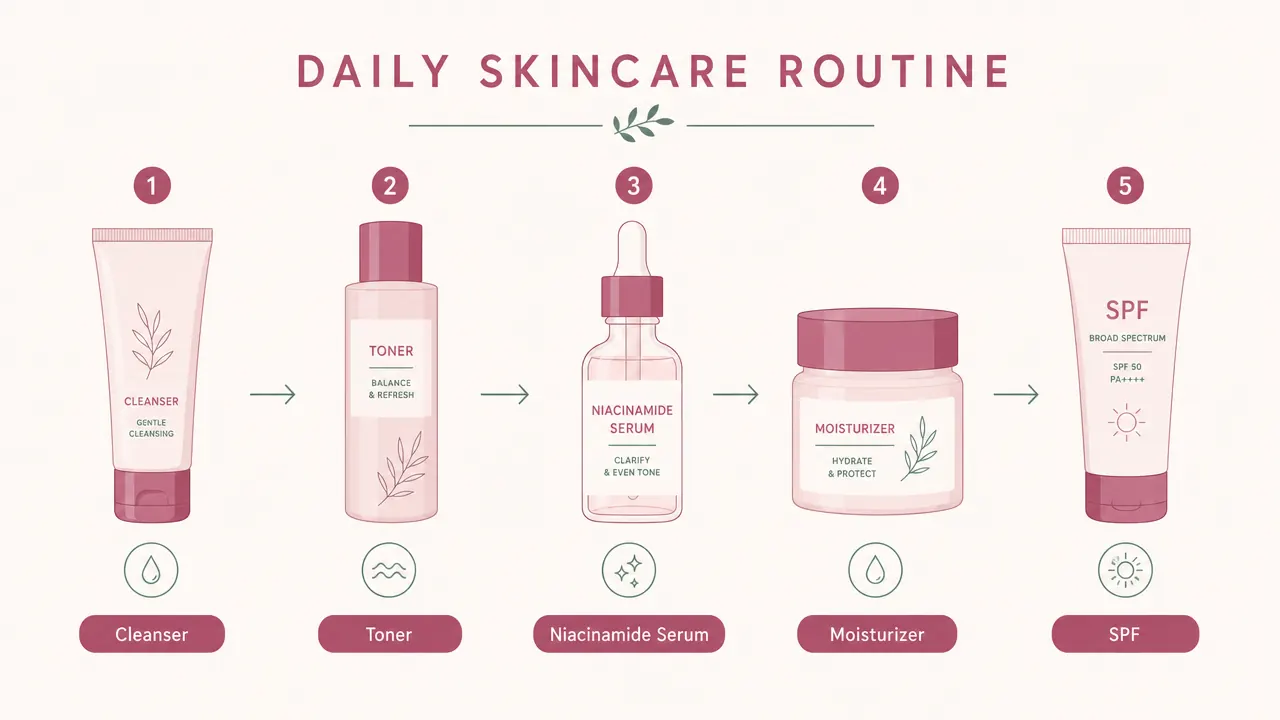
This guide walks through the exact routine I follow and recommend: what to do before you apply the serum, how to apply it correctly, what to layer on top, and how to build consistency over the weeks it takes for real texture improvements to show up. There is no complicated 11-step system here. Five steps, done in the right order, used consistently over six to eight weeks. That is the whole plan.
If your pores are the main problem, this $6 serum is where most routines should start.
The Ordinary Niacinamide 10% + Zinc 1% has 56,000+ Amazon ratings, costs less than most lattes, and is formulated specifically for oily and congested skin. Check current availability below.
Amazon Check Today's Price on Amazon →Step 1: Start with a Thorough but Gentle Cleanse
The biggest mistake people make before applying niacinamide is leaving a film of sunscreen, makeup, or excess sebum on the skin. Niacinamide absorbs well through clean skin. It does not absorb well through a layer of residue. In the morning, a low-lather gel or foam cleanser is the right choice for oily and combination skin. Avoid anything with fragrance, heavy oils, or sulfates that strip the barrier. Aggressive cleansing triggers the sebaceous glands to produce more oil, which defeats the purpose entirely.
At night, if you wear SPF or makeup, double-cleansing is worthwhile. Start with a micellar water or cleansing balm to remove surface debris, then follow with your regular face wash. Spend 60 seconds on this, not 15. The pores around your nose and chin are where oil and dead skin cells accumulate most densely, so pay extra attention to that T-zone without scrubbing. Rinse with lukewarm water, never hot. Pat dry with a clean towel and move to the next step within two or three minutes while your skin is still slightly damp.
Frequency: every morning and every evening. Consistency here matters more than any single product you use afterward.
Step 2: Apply a Hydrating Toner (Optional but Useful)
A toner is not mandatory, but a lightweight hydrating toner applied before your niacinamide serum can improve how evenly the serum distributes. This is especially true if you have dry patches coexisting with an oily T-zone. A water-based toner that contains glycerin or panthenol will plump the surface cells slightly and create a more receptive canvas for the niacinamide to sit on.
What you want to avoid at this step is anything with high-strength acids, retinol, or prescription treatments. Those belong at night, not layered under niacinamide in the morning. A pH-balancing or hydrating toner is the appropriate move here. Apply it by pressing gently into the skin with clean hands rather than wiping with a cotton pad, which wastes product and can cause unnecessary friction. Give it 30 to 60 seconds to absorb before moving to the serum.
Step 3: Apply The Ordinary Niacinamide 10% + Zinc 1%
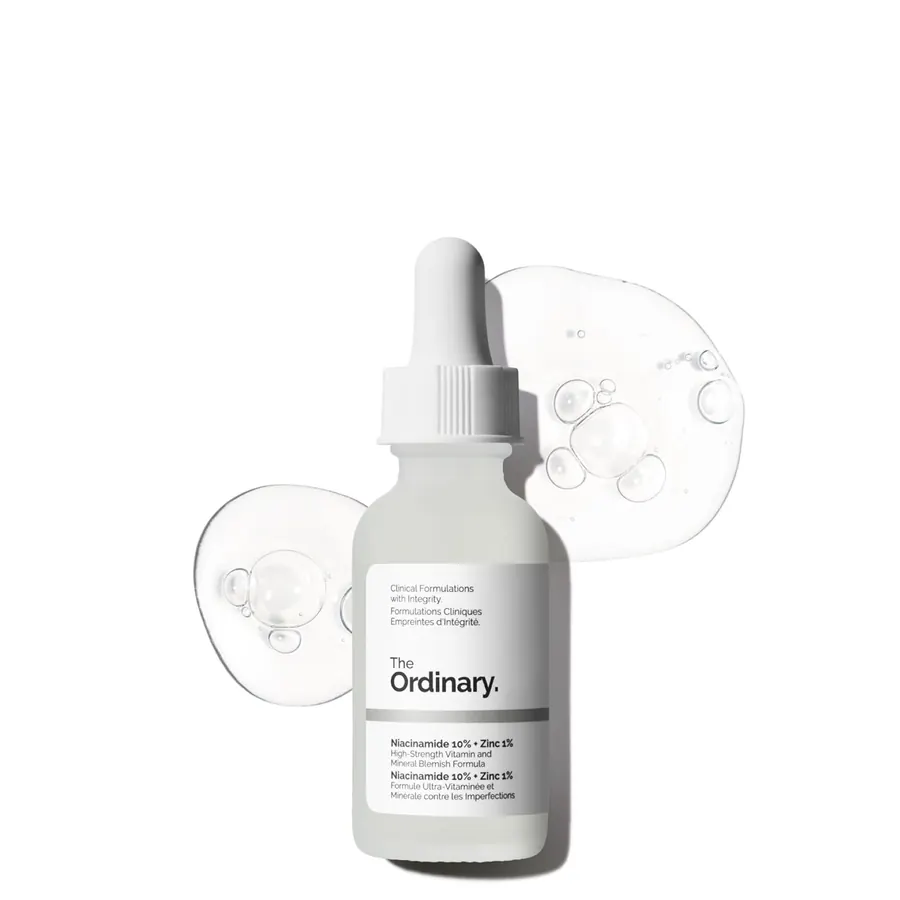
This is the core of the routine. Dispense two to three drops of The Ordinary Niacinamide 10% + Zinc 1% into the palm of your hand. Press your fingertips together to distribute it, then press the serum into your face rather than rubbing it in. Focus on the areas where pores are most visible: nose, chin, and the edges of the cheeks just below the cheekbones. These are typically the oiliest zones and the ones where sebum-stretched pores are most obvious.
The formula is water-based and colorless with a very light, slightly watery texture. It sinks in quickly, within a minute or so, and leaves behind no residue or tackiness. Some people notice a faint smell at first, which dissipates as it dries. If your skin is on the sensitive side, start with just the oily zones for the first two weeks rather than applying all over, and see how your skin responds before expanding coverage.
Niacinamide at 10% works by regulating sebum production at the follicle level, reducing the excess oil that stretches pore walls outward. The zinc in this formula adds a secondary layer of sebum control and also provides mild antibacterial properties. Neither ingredient is an acid or an exfoliant, which makes this one of the safest actives to use daily without a rest period. Morning, evening, or both is appropriate. I use it both morning and night and have for over two years without irritation.
If you want more context on how this product specifically performed over a 90-day stretch, the full long-term review of The Ordinary Niacinamide goes into the texture, absorption, and week-by-week results in detail.
Step 4: Seal With a Lightweight, Non-Comedogenic Moisturizer
One of the counterintuitive facts about oily skin is that it still needs moisture. When the skin is dehydrated, the sebaceous glands compensate by producing more oil, which means skipping moisturizer actively worsens the problem you are trying to solve. After your niacinamide has had a minute or two to absorb, apply a lightweight, non-comedogenic moisturizer to lock in the serum and maintain your barrier.
For oily or combination skin, look for gel-cream or lotion-weight formulas rather than thick creams or oils. Key ingredients to look for: hyaluronic acid, glycerin, ceramides, or squalane at low concentrations. What to avoid: coconut oil, lanolin, petrolatum in a thick base, or any fragrance. A well-chosen moisturizer here will feel weightless and will not undo the sebum control the niacinamide is working to build.
Apply using gentle upward pressing motions, same technique as the serum. You do not need much. A pea-sized amount for the whole face is the right starting quantity for most skin types.
Skipping moisturizer on oily skin does not help. Dehydrated skin compensates by producing more sebum, which stretches pores further. A lightweight gel-cream is the correct move.
Step 5: Finish the Morning Routine with SPF 30 or Higher
Sun exposure is one of the most direct causes of enlarged pores over time. UV damage degrades the collagen that keeps pore walls taut and firm. As that structural support weakens with cumulative sun exposure, pores become permanently looser and harder to manage. Niacinamide helps address the oil side of this equation; sunscreen addresses the structural damage side. You need both.
For oily or combination skin, look for a non-comedogenic mineral or hybrid SPF with a matte or satin finish. SPF 30 is the minimum. SPF 50 is better. Apply it as the last step in your morning routine, after your moisturizer has had two minutes to settle. Use a dime-sized amount for the face alone, more than most people apply. Reapply every two hours if you are outdoors.
If you find that your sunscreen pills or sits on top of the serum and moisturizer, let each layer dry slightly longer before adding the next. A 90-second wait between serum, moisturizer, and SPF solves most pilling issues without requiring a complete formula change.
What Else Helps: Supporting the Routine Over Time
The five-step routine above handles the daily maintenance side. But pore visibility is also affected by cell turnover, which slows naturally with age. Adding a chemical exfoliant two to three nights per week can improve how smoothly the serum absorbs and accelerate the texture improvements you are trying to achieve. Salicylic acid (BHA) at 0.5% to 2% is particularly well-suited to pore-focused routines because it is oil-soluble and penetrates the follicle lining directly, dissolving the keratin plugs and sebum that cause blackheads and stretched pores. Use it on alternating nights and skip it on the same night as any prescription treatment you may be using.
Retinol is another addition worth considering if you are comfortable with the adjustment period it requires. It supports collagen synthesis, which improves the structural firmness around pore openings over time. If you decide to layer retinol into this routine, use it at night only, on nights when you are not using a BHA. Never combine retinol and BHA on the same evening without building up significant tolerance first.
For a broader look at everything niacinamide specifically offers oily and congested skin beyond pore control, the full breakdown of how niacinamide helps oily skin covers redness, blemishes, uneven texture, and more.

What Timeline to Expect
Week one and two: almost nothing visible. This is not a product that delivers an immediate blur effect. If you are looking for instant optical pore-filling, that is what a silicone primer does. Niacinamide works differently. It is adjusting how your skin behaves at a cellular level.
Weeks three and four: most people notice that their skin looks less shiny by midday than it used to. The T-zone does not feel as urgent. Foundation and sunscreen stay put longer. Pores may look slightly less obvious in person, though not dramatically.
Weeks six through eight: this is when the texture shift becomes noticeable. Pore walls that were stretched by excess oil production start to look tighter as sebum output decreases. The skin around the nose and chin looks smoother in natural light. If you have been taking consistent progress photos, this is the window where the difference becomes visible in comparison.
Beyond week eight: the improvements continue gradually but more slowly. The goal at this point is maintenance, not acceleration. Consistent daily use is what keeps the results stable.
Common Mistakes That Undercut the Results
Mixing niacinamide with vitamin C is often cited as a problem, but the original concern was based on outdated research on unstable forms of vitamin C. At the concentrations and forms commonly used in modern serums, layering niacinamide and a stabilized vitamin C in the same routine is generally fine. If you want to be conservative, use vitamin C in the morning and niacinamide at night, or apply them at separate time points in the same routine.
Using too much product is another common error. Two to three drops is the correct amount. More does not mean faster results. It means product sitting on the surface, potentially causing mild congestion in some skin types.
Inconsistency is the most common failure point. Using the serum four days, skipping a week, using it again for three days, and then abandoning it will not produce measurable results. The mechanism requires sustained use. Build it into a specific step you do every single morning. Anchor it to something you already do automatically, like brushing your teeth.
Ready to start the routine? The serum that drives every step in this guide is under $6.
The Ordinary Niacinamide 10% + Zinc 1% is the most accessible entry point to a pore-minimizing routine you will find. Over 56,000 people with oily and blemish-prone skin have rated it 4.7 out of 5 stars on Amazon.
Amazon Check Today's Price on Amazon →