
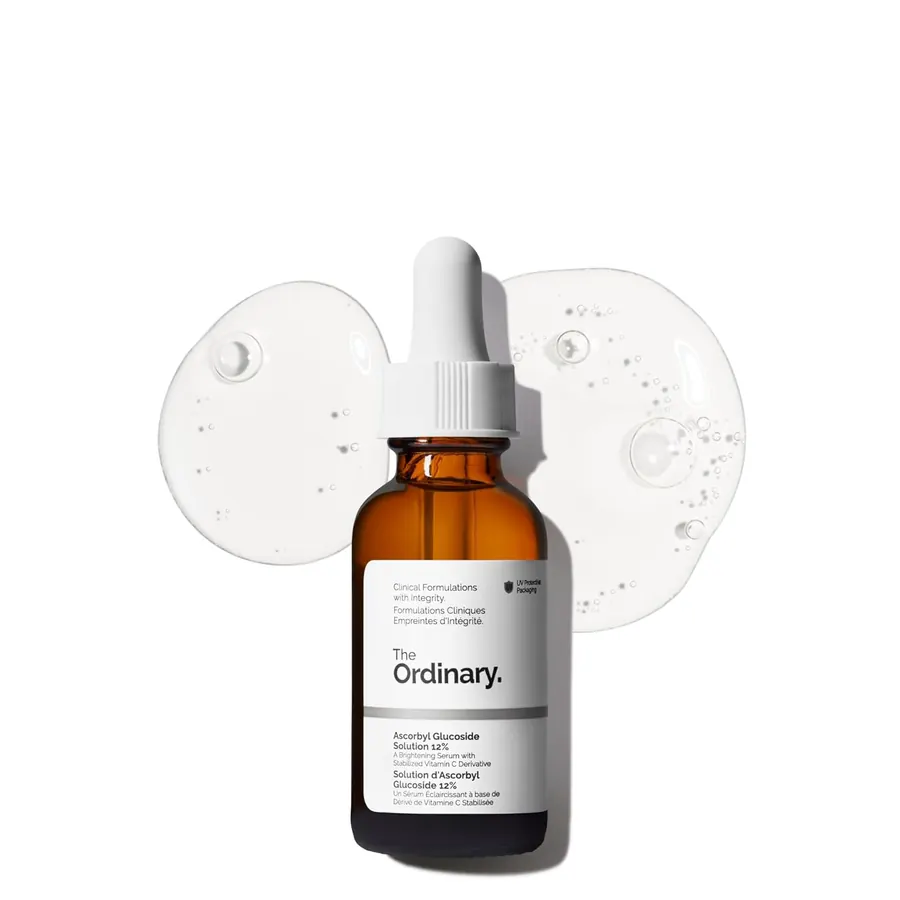
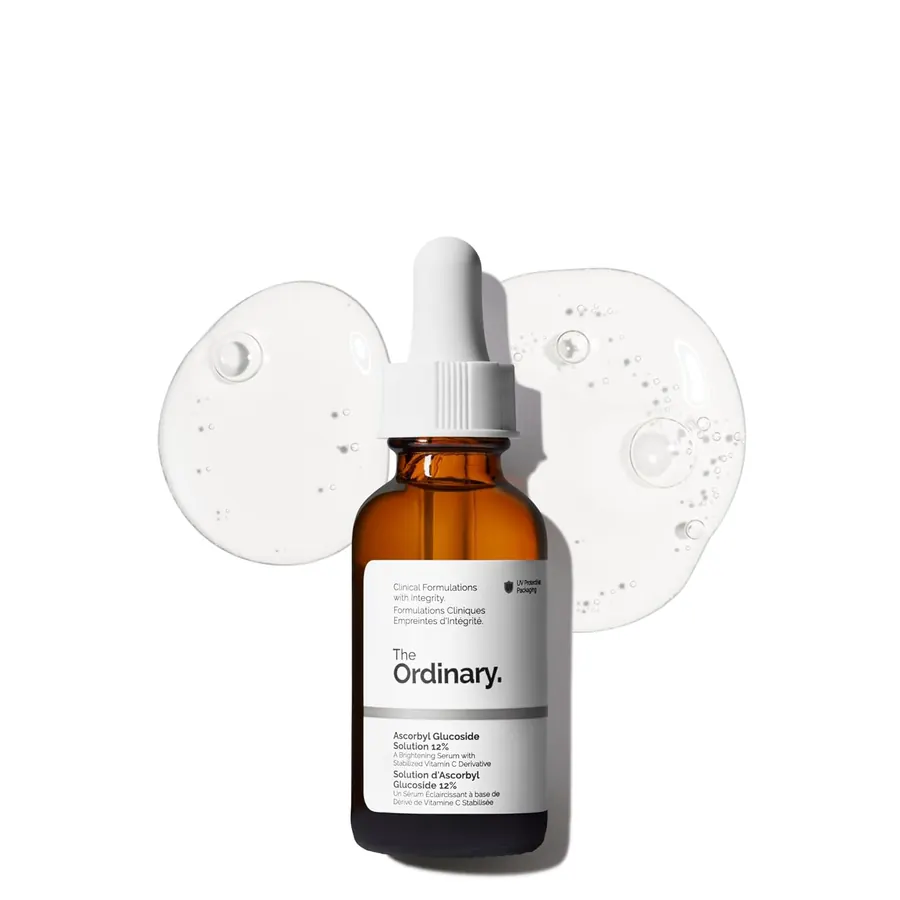
Four months ago I picked up a bottle of The Ordinary Ascorbyl Glucoside Solution 12% because I wanted something I could actually stick with. I had tried higher-concentration L-ascorbic acid serums twice and both times quit within three weeks. The oxidation smell, the orange tint showing up on my collar, the tingling that felt more like a warning than a feature. This $14.80 bottle promised a gentler entry point, and I wanted to know whether gentler also meant effective. My skin is combination, leaning dry on the forehead and cheeks, with a scattering of post-inflammatory marks left over from last summer. I am in my mid-thirties. I applied this serum every weekday morning before SPF for sixteen weeks. Here is what I found.
The Quick Verdict
A genuinely stable, low-irritation vitamin C serum that delivers slow, real improvement in brightness and spot fading over months. Not the fastest option on the market, but the most consistent I have used at this price.
Amazon Check Today's Price →If you have ditched other vitamin C serums for being too harsh, this one starts gentler.
The Ordinary Ascorbyl Glucoside Solution 12% is currently under $15 on Amazon. 4.6 stars across more than 2,200 reviews.
Amazon Check Today's Price on Amazon →How I Used It
Every weekday morning: cleanse, two drops of this serum patted onto damp skin (forehead, cheeks, jawline, avoiding the eye area), then a layer of SPF 30. On days I wore foundation I noticed the serum made my base sit slightly more smoothly, which I did not expect. I skipped weekends intentionally during the first month to let my skin adapt. By month two I was using it seven days a week with no adjustment issues.
I kept all other variables constant as much as possible. Same morning cleanser, same moisturizer, no new actives, no chemical exfoliants on the same morning. The one exception was a niacinamide serum at night, which I had used for months already and did not change. My goal was to isolate what the vitamin C serum was or was not doing.
The bottle dispensed cleanly every time. No clogging, no dripping. A two-drop application covered my full face and part of my neck without feeling stretched. At daily use, one 30 mL bottle lasted about eleven weeks, so plan on buying roughly four bottles per year.
Texture, Scent, and How It Feels on the Skin
The serum is water-thin, almost identical in viscosity to plain water. It absorbs within about thirty seconds and leaves nothing behind on the skin. No tackiness, no residue, no shine. If you have used a traditional vitamin C serum before and remember that slightly oily or gel-like layer, this has none of it.
The scent is faint and clean. Not citrusy, more like lightly scented water. I have sensitive-leaning skin and never noticed any irritation from the fragrance component. The formula contains no LAA (L-ascorbic acid), which is what typically drives the sharp citrus smell and the orange oxidation color. Instead it uses ascorbyl glucoside, a more stable vitamin C precursor, and the formula stayed clear and colorless in my bathroom for the full eleven weeks of a single bottle. No yellowing, no darkening.
Temperature and light exposure matter for every vitamin C product. I kept mine in a bathroom drawer rather than on the counter, and it stayed stable. If you leave it on a sunny windowsill, the formula will likely degrade faster regardless of what The Ordinary says about ascorbyl glucoside's stability advantage.
What Actually Changed After Four Months
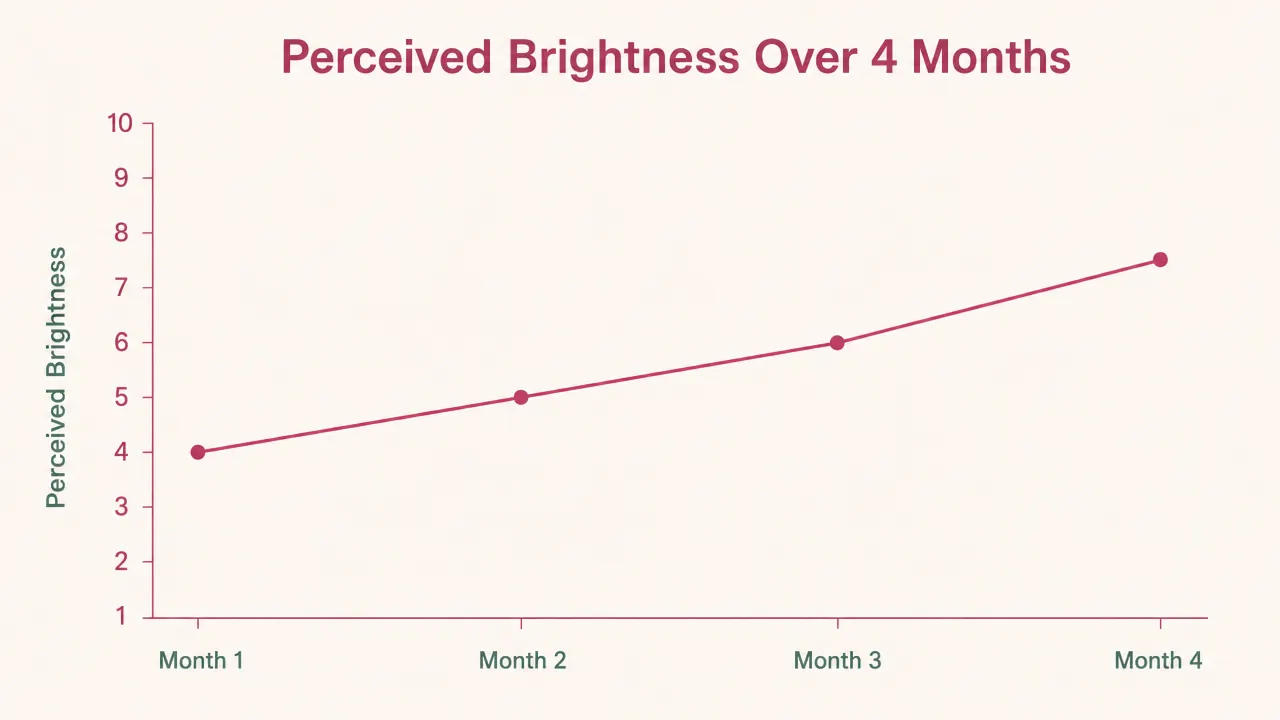
Month one: nothing visible. I noticed no change in brightness, no fading of the dark marks on my left cheek from a blemish that healed in August. I was aware this might happen and kept going.
Month two: I started to see something. The overall tone of my skin looked more even when I checked in natural light without makeup. The hyperpigmented marks were not gone, but they were lighter, softer at the edges. My skin also looked less flat. The word I kept writing in my notes was 'cleaner,' which is not a clinical term but it is accurate.
Month three was the most noticeable shift. Three specific marks on my left cheek faded from a medium brown to a light tan. The general dullness I had lived with on my forehead was largely gone. My partner asked what I had changed, and I told him vitamin C. He was skeptical. I showed him my notes.
Month four: incremental improvement. The most stubborn mark, a post-pimple spot from July, was still faintly visible but no longer something I covered with concealer. Overall brightness held steady. I did not see dramatic gains in month four beyond month three, which suggests this formula reaches a plateau and you maintain rather than continue to improve.
The Ingredient Behind the Formula
Ascorbyl glucoside is a vitamin C derivative where a glucose molecule is attached to ascorbic acid. Your skin enzymes slowly cleave the glucose off and release the active ascorbic acid. This conversion process is what makes it gentler: you are never putting a high concentration of free ascorbic acid directly on your skin barrier. It is also why the results take longer to show up. You are waiting for the enzymatic conversion step to happen consistently, session after session.
The 12% concentration refers to the total ascorbyl glucoside in the bottle, not the effective ascorbic acid concentration after conversion. Estimates for conversion efficiency put the active yield somewhere around 6 to 8%. That is lower than what you get from a well-formulated 15% or 20% L-ascorbic acid serum applied directly. If speed of results is your primary goal, that gap matters. If tolerance is your primary constraint, the stability and gentleness are real advantages.
Month three was the turning point. Three post-pimple marks on my cheek went from medium brown to light tan. That is the most consistent fading I have seen from any vitamin C at this price.
What Did Not Improve
Two things stayed roughly the same over four months. First, the deeper hyperpigmentation on my right cheek from a hormonal cluster breakout a few years back. Those marks are older and deeper than the more recent ones, and the ascorbyl glucoside did not visibly touch them. This is not a failure of this serum specifically. LAA-based formulas tend to underperform on older, deeper pigmentation too, so the expectation may simply be wrong regardless of product.
Second, texture. The Ordinary's formula does not do anything for surface roughness or congested pores. If your main concern is skin smoothness rather than brightness, a niacinamide or a chemical exfoliant will serve you better in that category. This serum is a brightening and antioxidant product. It does not exfoliate and does not claim to.
What I Liked
- Stays clear and stable for the full life of the bottle, no orange oxidation
- No irritation, sting, or adjustment period even on sensitive or dry skin
- Visible improvement in skin brightness and recent post-blemish marks by month two to three
- Water-thin texture layers under SPF and makeup without pilling or tackiness
- Under $15 makes daily, year-round use financially practical
- Consistent dropper that dispenses cleanly every time
Where It Falls Short
- Results take longer than LAA-based vitamin C serums. Month one shows nothing
- Does not visibly improve older or deeper hyperpigmentation
- No exfoliation or pore benefit. Addresses only brightness and antioxidant protection
- The 12% is a total concentration, not effective dose. Active yield is lower than the label implies
- Slight powdery film if over-applied or if you layer too quickly onto dry skin
How It Compares to Other Vitamin C Formats
The two main alternatives in the vitamin C space are L-ascorbic acid serums (higher active concentration, faster results, more irritation risk, shorter shelf life before oxidation) and vitamin C ester derivatives like this one (slower, gentler, more stable). The Ordinary themselves sell a 23% L-ascorbic acid formula as a separate product, which is at the aggressive end and not appropriate for beginners or for daily use without a careful introduction protocol.
If you have been curious about whether the higher-end LAA vitamin C serums are worth the price jump, I put together a full side-by-side comparison between The Ordinary and SkinCeuticals C E Ferulic. The short version: the ingredients tell a real story, and the gap narrows more than the price difference suggests for most skin types.
At the price, this serum is the entry point I would recommend to anyone who wants to add vitamin C to their routine but does not want the drama of a strong LAA formula. If you already have experience with vitamin C and you are chasing faster results, you may find this too slow. If you are starting fresh or you have been burned by harsh formulas, this is where I would tell you to start.
Who This Is For
This serum works best for people who are new to vitamin C and want to build the habit before committing to a more aggressive formula. It also works well for anyone with sensitive, dry, or reactive skin that has struggled with irritation from stronger LAA serums. If you have mild to moderate recent post-blemish marks and you want to see them fade gradually over two to three months, this delivers on that. And if you simply want daily antioxidant protection layered under sunscreen without any added complexity, the formula does that job quietly and reliably. The ten science-backed reasons vitamin C belongs in a morning routine are worth reading if you are still deciding whether vitamin C is even the right category for your concerns.
Who Should Skip It
If your primary concern is deep, established hyperpigmentation that has been on your skin for two or more years, this formula is unlikely to make a visible dent. You would likely need a higher-strength LAA serum used consistently, a prescription tretinoin, or a targeted spot treatment alongside vitamin C. Similarly, if you want visible results within four weeks, the ascorbyl glucoside conversion process is not designed for speed. Go in with a six-month mindset or look at a stronger format. If you already use an LAA vitamin C regularly with no irritation issues, switching to this formula would likely be a step down in potency without a meaningful benefit.
Four months of steady improvement for under $15 a bottle. Worth having in the rotation.
The Ordinary Ascorbyl Glucoside Solution 12% is available on Amazon with free shipping on qualifying orders. Over 2,200 verified buyers rated it 4.6 out of 5 stars.
Amazon Check Today's Price on Amazon →