
I have oily skin on my T-zone and my pores on the nose and chin have been visible since my mid-twenties. I have used primers, clay masks, every mattifying moisturizer I could find at the drugstore, and nothing held. My skin would look fine at 8am and by noon the shine was back. I started using The Ordinary Niacinamide 10% + Zinc 1% every morning in early March. I am writing this in early June, after 90 consecutive days of use. It has 56,000 reviews on Amazon and a 4.7-star average. I wanted to know whether the numbers hold up when you go past the first bottle.
My skin profile for context: combination, more oily than dry, prone to small closed comedones along the chin and forehead, and I run warm so by mid-afternoon my face registers the oil regardless of what I put on it. I am 34. I was not treating acne, just trying to make my skin look less congested and feel less slick by midday.
The Quick Verdict
A genuinely useful serum for oily, pore-heavy skin at a price that makes it easy to stay consistent. Results are real but gradual, and the texture is not for everyone.
Amazon Check Today's Price →Your skin is oily by noon and your pores are always visible. This $6 bottle is the most-reviewed niacinamide on Amazon for a reason.
Over 56,000 verified buyers on Amazon have rated The Ordinary Niacinamide 10% + Zinc 1% at 4.7 stars. Check today's price below.
Amazon Check Today's Price on Amazon →How I Used It
I applied three to four drops to my clean face every morning, after toner and before my SPF moisturizer. I did not use it at night. I picked the morning application deliberately because oil control was my main goal, and I wanted the zinc working during the hours my face actually produces the most sebum. I kept the rest of my routine flat, the same cleanser, the same moisturizer, no actives on top of the niacinamide. I did not layer it with vitamin C, which can be tricky in combination, and I paused my retinol on niacinamide mornings to avoid anything competing for absorption. I was not strict about the retinol pause after the first six weeks, and I did not notice a difference either way.
The application experience is straightforward. The liquid is thin and slightly watery, almost like a toner in consistency. It sinks in within about thirty seconds on clean skin. There is no pull, no sting, no obvious fragrance. I have sensitive skin around my nose and I had zero irritation across the entire three months. One note: if you apply it on top of a very thick layer of toner, it can pill slightly when you add moisturizer. I learned to let it sit for a full sixty seconds before moving on.
The bottle is 1 fl oz and it lasted me exactly nine weeks at four drops per morning. So at the current price, that works out to roughly two bottles for a full three months. The packaging is functional but not elegant. It is a dropper bottle with a rubber bulb, and the rubber can start to feel a little soft after six weeks of squeezing. The serum itself never oxidized or changed color, which is a good sign for the formula stability.
What the Ingredients Actually Do
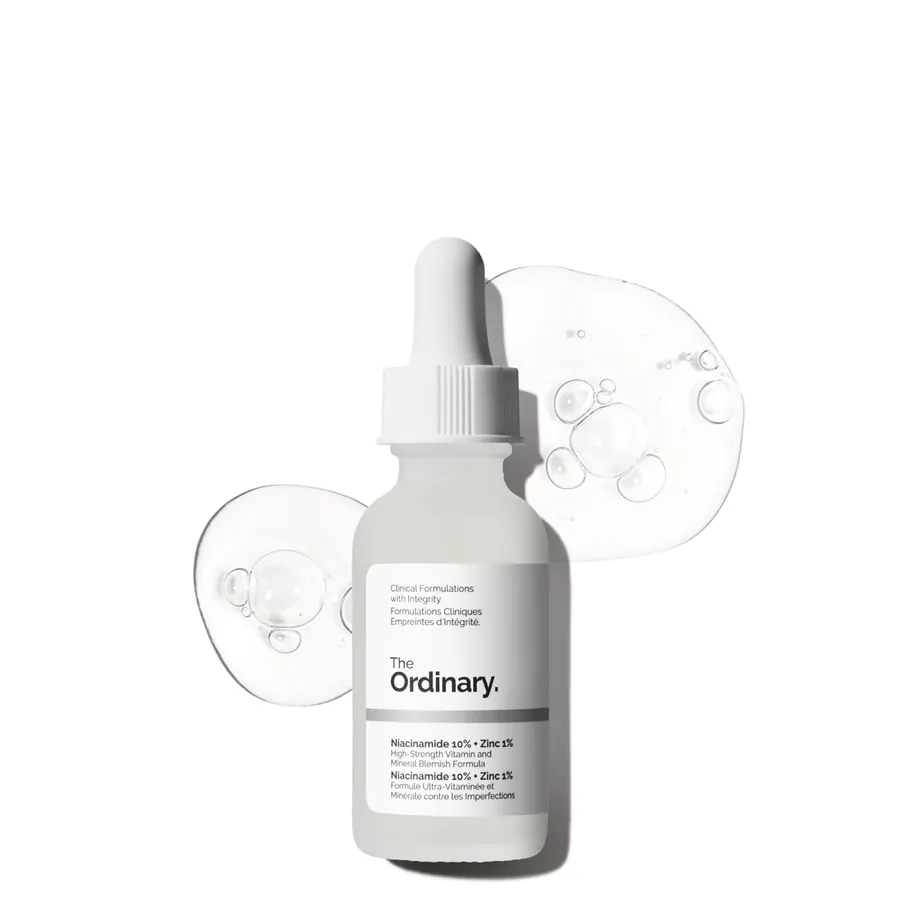
Niacinamide is a form of vitamin B3. At 10%, which is a meaningful concentration, it has solid evidence for reducing the appearance of enlarged pores, controlling sebum production, evening out skin tone, and reducing the look of redness. It is water-soluble, which means it sits in the water phase of your skin rather than the oil phase, and that makes it broadly compatible with most skin types and most other actives. The Ordinary's version pairs it with zinc salt PCA at 1%, which adds a separate oil-regulating mechanism. Zinc is associated with reducing sebaceous gland activity and has mild anti-inflammatory properties.
The base formula is minimal: water, niacinamide, zinc salt PCA, and a short list of functional ingredients. There is no fragrance, no essential oils, no alcohol. That stripped-down formula is probably why this serum has so few reports of irritation, even among people with reactive skin. The tradeoff is that there is no added hydration from ingredients like hyaluronic acid or glycerin, so if you have dry skin this serum alone will not add moisture. You will need something else in the routine for that.
By week six, my midday check was less alarming. The oil was still there, but the visible congestion on my nose had started to look smaller in direct light.
What Changed at 30, 60, and 90 Days
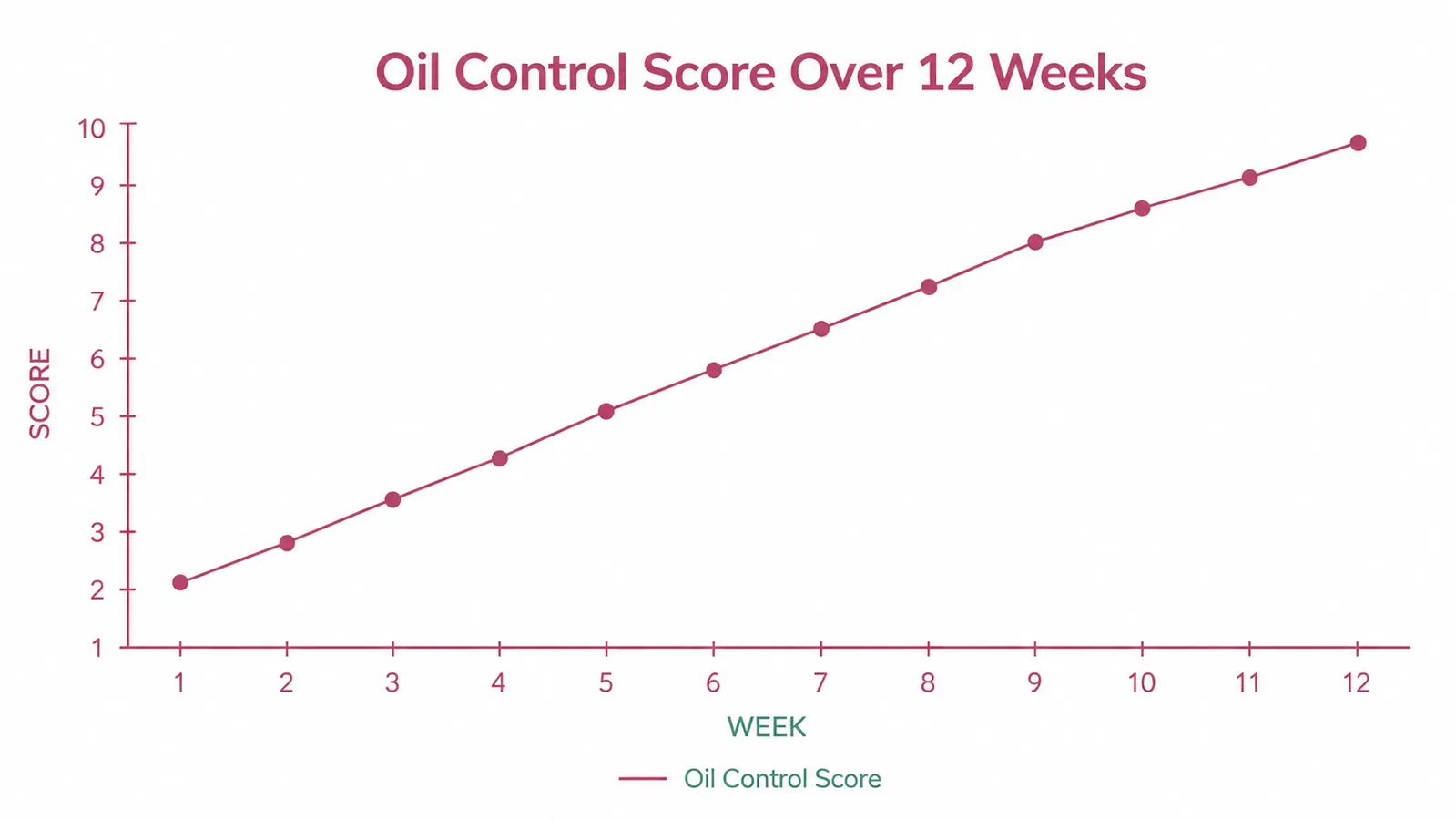
At 30 days I noticed one change clearly: my skin looked less red in the morning before I applied anything. My nose area, which normally carries some ambient redness, looked calmer. I was not expecting this because I was focused on the pore and oil angle, but it was noticeable enough that two people asked if I had changed my diet. Oil control at this stage was not yet obvious. I still needed to blot by early afternoon.
At 60 days, oil control had improved measurably. I started checking at 2pm as my benchmark, because that is historically my worst point in the day, and the amount of visible shine on my forehead and chin was noticeably lower. I still had oil, but I would describe the level as manageable rather than distracting. The pores on my nose looked slightly less pronounced in photos. I want to be precise here: they did not disappear, but the edges looked softer. Texture on my cheeks, which had always been rough in a low-grade way, was smoother.
At 90 days the improvements held and in two areas went a bit further. The closed comedones on my chin, those tiny hard bumps under the skin that never fully surface, had reduced. I counted roughly twelve before starting, and by day 90 I was down to around four. The caveat is that I also cleaned up my moisturizer around week eight, switching to a lighter gel formula, so I cannot credit the niacinamide entirely for that change. But the timeline lines up with when I first saw the improvement, which was around week seven. Redness stayed calmer than my baseline throughout.
Texture and Wear Under Makeup
The thin, watery consistency works well under makeup. I wear tinted SPF most days and a full foundation twice a week. The serum created no pilling under either formula when I gave it adequate dry-down time. On the two days I rushed my routine and applied moisturizer immediately after the serum, I got slight pilling around the nose. That is a technique issue, not a formula flaw. The bigger payoff I noticed with makeup was that my foundation sat more evenly at the end of the day. Without the serum in my routine, I typically had breakthrough oil by hour five. With it, I was getting closer to hour seven or eight before needing to blot.
One thing worth knowing: if you have visible pores around your nose and cheeks, this serum will not fill them or visually blur them the way a silicone primer does. What it does is reduce the sebum inside the pore, which over time makes the pore look smaller because it is not being stretched open by oil. That is a slower, structural improvement, not an instant cosmetic fix. If you are looking for something that makes pores invisible in photos, this is not that product.
What I Liked
- 10% niacinamide is a clinically meaningful concentration, not a trace amount
- Fragrance-free, alcohol-free, no known irritants, suitable for sensitive skin
- Clear improvement in oil control and pore appearance by week six
- Plays well with most other actives, including SPF, retinol, and BHAs
- 56,000+ Amazon reviews at 4.7 stars is a signal that spans a wide range of skin types
- Price makes it easy to stay consistent for months without reconsidering
Where It Falls Short
- No moisturizing ingredients, so dry or dehydrated skin will need a separate hydrator
- Rubber dropper bulb starts to feel soft after six weeks of use
- Results are slow, expect four to six weeks before oil control changes noticeably
- Watery consistency can pill if layered too quickly over thick toners
- Does not visually blur pores the way a silicone primer does
How It Compares to What I Tried Before
Before this I had tried two other niacinamide serums, both at lower concentrations, 5% and 4%, and neither moved the needle on oil control in the way this one did. The concentration difference matters. I have also looked at whether this covers the same ground as a BHA exfoliant like Paula's Choice 2% BHA, and the answer is that they do different things even though the outcomes can look similar on oily skin. If you want a full breakdown of how those two products compare for pores and oil, I have a separate piece on The Ordinary Niacinamide vs Paula's Choice BHA that goes through the mechanism differences in detail.
The short version is that niacinamide works upstream, regulating how much oil the sebaceous gland produces, while a BHA works downstream, clearing out the pore of the oil that already collected there. They complement each other, and some people use both. But if I had to pick one to start with for congested, oily skin, I would pick this serum because it has lower irritation risk and you can use it every morning without concern about photosensitivity.
Who This Is For
This serum is a strong match for anyone with oily to combination skin who is dealing with visible pores, midday shine, or persistent closed comedones. It also works well for anyone dealing with redness or an uneven skin tone that is not linked to pigmentation, since niacinamide has a good track record for calming the skin overall. It is particularly well-suited to someone who is new to actives, because the formula is gentle enough to use alongside whatever else is in the routine without needing much management. If you want a primer on all the specific ways niacinamide addresses oily and congested skin, the article on 10 ways niacinamide serum helps oily skin breaks down each mechanism individually.
It is also a good option for people who have tried products with fragrance or essential oils and kept hitting irritation. The stripped-down formula here is about as clean as a serum gets in this category. The price removes the psychological barrier of using it every single day, which matters more than people admit. A product you use every day because it is affordable will outperform a product you ration because it is expensive.
Who Should Skip It
If your main skin concern is dryness or dehydration, this serum adds no moisture and should not be your first investment. Spend the same budget on a good ceramide moisturizer or a hyaluronic acid serum first. If you have dry skin with occasional oiliness in the T-zone, a targeted niacinamide product with added hydration would serve you better than this minimalist formula.
If you are dealing with active, inflammatory acne rather than closed comedones or general congestion, niacinamide will help with redness but it is not a treatment for active breakouts in the way that benzoyl peroxide or adapalene is. Manage expectations: this is a regulation and maintenance product, not a spot treatment. And if you want visible pore blurring for photos or a night out, a silicone primer will do more in ten minutes than this serum will do in ten days. Those are different tools.
If oily skin is what you are working on, this is where most people on a budget should start.
The Ordinary Niacinamide 10% + Zinc 1% is the most-reviewed niacinamide serum on Amazon. At this price point, staying consistent for a full three months costs less than a single dinner out. Check today's price on Amazon.
Amazon Check Today's Price on Amazon →