
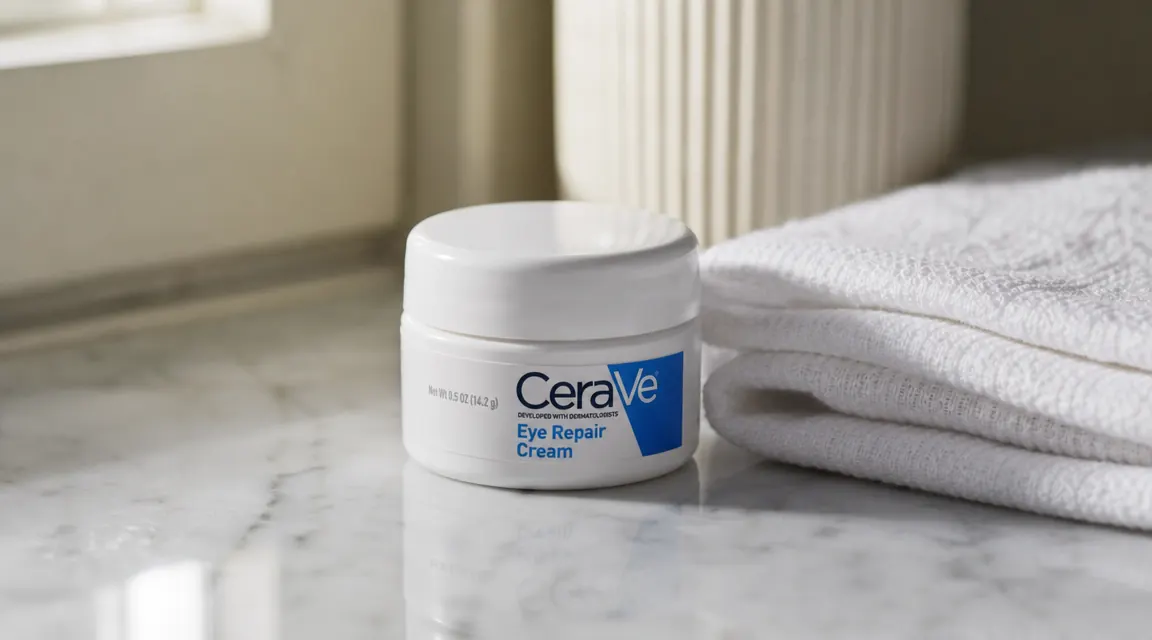
About four months ago, I reached the point where my under-eye situation had become genuinely distracting to me. I am 38, combination skin, and I had been dealing with a particular combination of dark purple undertones, morning puffiness that hung around until noon, and a fine crepe-y texture that made concealer look patchy by 9 a.m. I had a bathroom shelf of serums and moisturizers I trusted. I did not have an eye cream. I started using CeraVe Eye Repair Cream because it was available at my local Walgreens, it had 73,000 Amazon ratings I could cross-reference, and it cost less than my last tube of hand lotion. Four months later, twice a day without skipping, I have a clear picture of what it does, what it does not do, and who should actually buy it.
The short version: it is a solid, functional hydrating eye cream that genuinely reduced my morning puffiness and smoothed texture, but did not meaningfully fade the purple dark circles I was hoping to address. If you are chasing pigment reduction, you will need a different product or a different expectation. If you are chasing barrier support, hydration, and softer skin under the eye, this delivers consistently.
The Quick Verdict
Reliable, gentle, and noticeably effective for puffiness and texture. Less useful for dark circles rooted in pigment. A logical first eye cream.
Amazon Check Today's Price →Your under-eye skin is thinner than the rest of your face. This formula was built for exactly that.
CeraVe Eye Repair Cream uses ceramides and hyaluronic acid to hydrate and reinforce the skin barrier under and around the eye, where skin is thin and reactive.
Amazon Check Today's Price on Amazon →How I've Used It
I applied it morning and night for the full four months, starting late January and running through late May. Each session: one small pea-sized amount split across both eyes, applied with my ring finger in light tapping motions starting at the inner corner and working outward. I did not rub. I did not press hard. I applied it after serum, before SPF in the morning, and after my night moisturizer in the evening. No other eye product during the test period, which meant I kept my niacinamide serum clear of the orbital area.
My skin condition going in: mild hereditary dark circles with a bluish-purple tone, moderate puffiness every morning that tied directly to sleep quality and salt intake, and a texture issue I can best describe as faint horizontal creasing on the lower lid. No sensitivity, no known allergies, no prescription medications that affect skin. This was a clean test.
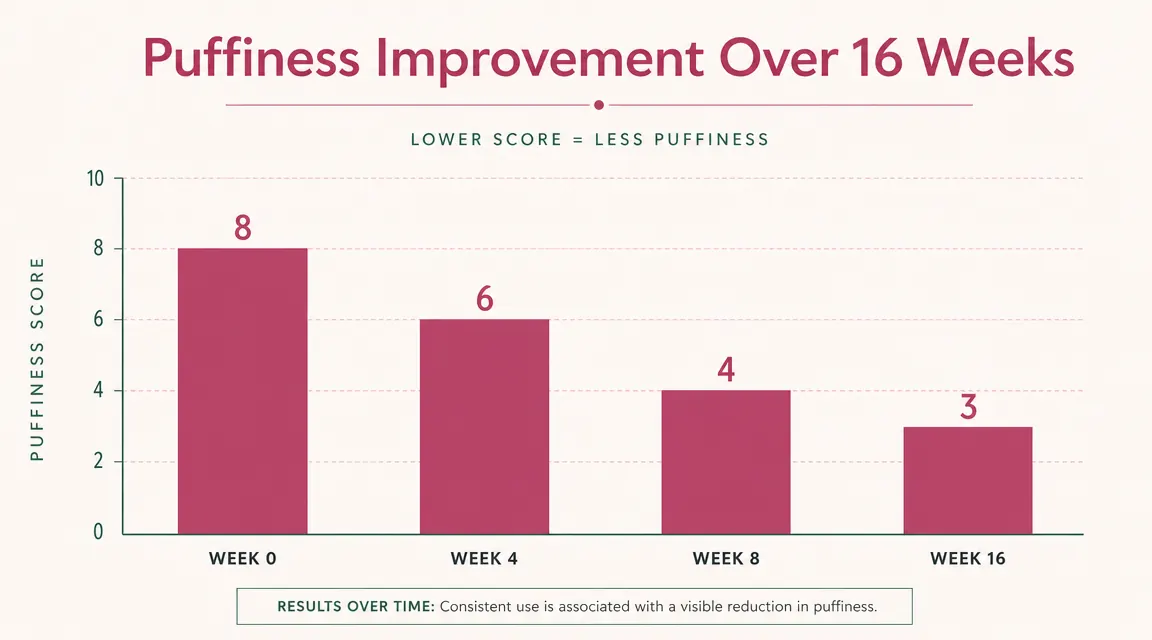
I tracked puffiness on a simple 1-10 scale by logging how long it took after waking for my under-eye area to look settled. At week zero, my average was about an 8 out of 10 severity on mornings after a normal night. By week four it had dropped noticeably, to about a 6. By week eight I was consistently around a 4, meaning my eyes looked passable within an hour instead of two to three hours. By week sixteen, a 3. Not gone, but substantially quieter.
What Is Actually in This Cream
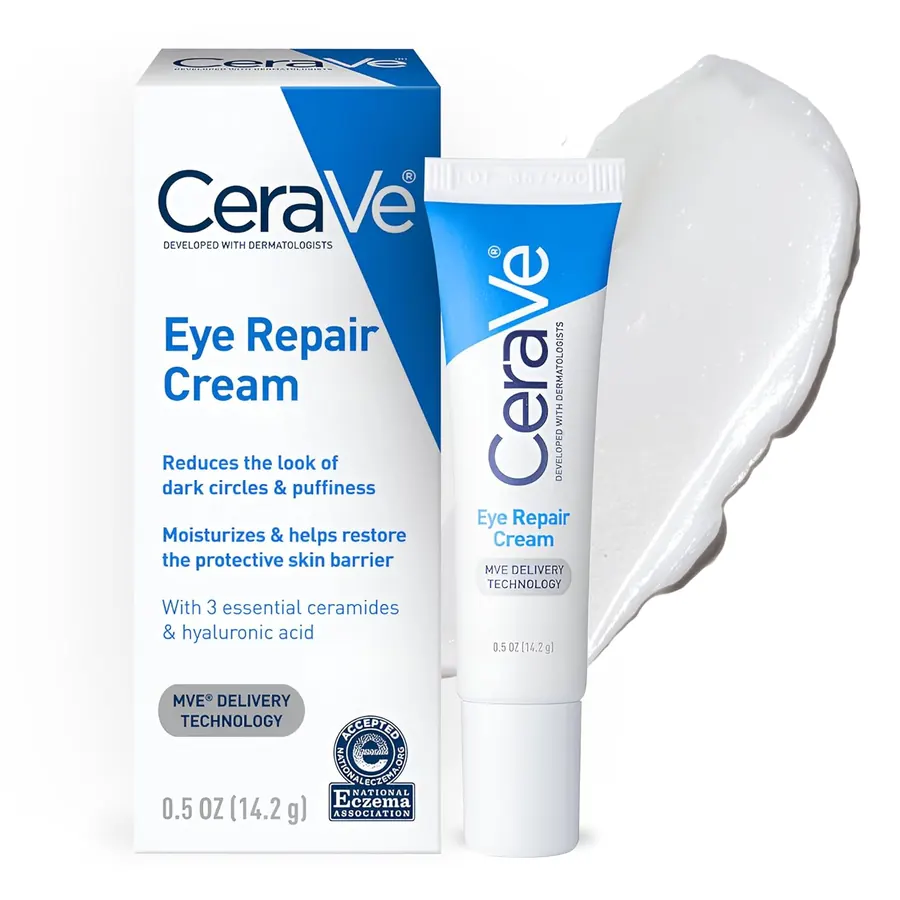
CeraVe's Eye Repair Cream contains three ceramides (1, 3, and 6-II), hyaluronic acid, niacinamide, and caffeine. The ceramides and hyaluronic acid handle the moisture and barrier side of things. The niacinamide, at a low concentration here, provides some brightening and calming support. The caffeine is the ingredient doing the heavy lifting on puffiness, by helping constrict blood vessels temporarily and reduce fluid accumulation under the eye.
What the formula does not have: retinol, peptides, vitamin C, kojic acid, or any targeted depigmentation ingredient. This matters because dark circles come from two different sources. Vascular dark circles, which show up purple or blue, are caused by dilated blood vessels visible through thin skin. Pigmentary dark circles, which are brownish, are caused by melanin deposits. CeraVe Eye Repair Cream addresses the vascular type indirectly via caffeine, but it does not address pigment at all. If your dark circles are brownish or tied to sun exposure, this product is not going to touch them.
The texture is a light, non-greasy cream. It sinks in within about 60 seconds and leaves no residue or greasiness. I was able to apply concealer over it immediately with no pilling. That alone puts it ahead of half the eye creams I have tested over the years, which ball up under makeup and create more of a problem than they solve.
Results Over 4 Months: What Changed and What Didn't
The single biggest change I noticed was the texture improvement. By week six, the fine horizontal crepiness on my lower lid had softened substantially. It did not disappear, but it no longer caught the light in a way that made my concealer look textured. This is the thing I was not expecting and the thing I appreciated most. The ceramides in this formula are doing real work on the skin barrier, which is what drives that improvement. I was also less prone to the tight, dry feeling under my eyes in the morning, which had been a low-grade irritation I did not fully register until it stopped.
By week six, the fine crepiness on my lower lid had softened enough that concealer stopped catching. That was the change I did not expect and appreciated most.
The puffiness reduction was real and consistent, as the chart above shows. I saw steady improvement through week eight and then a plateau. After that, my puffiness on bad sleep nights was still noticeable, but my baseline on an ordinary night was quieter. The caffeine in the formula seemed to be working steadily and I did not notice any fading of that effect over the four months.
The dark circles were a different story. My underlying bluish-purple tone did not meaningfully change. I compared photos from the start and end of the four months under the same bathroom lighting, and the color was essentially the same. What did change is that my skin looked smoother and more hydrated, which made concealer coverage look better and last longer. That is a real-world benefit, but it is not the same as the circles fading. If color reduction is your main goal, I would suggest looking at a targeted vitamin C eye product or an eye cream with a retinoid before reaching for this one.
How It Compares to Other Options
I want to address the most common alternative people ask about alongside this one. If you are debating between this and an eye cream with retinol, the core difference is purpose. CeraVe Eye Repair Cream is a barrier-support and hydration product that uses caffeine for puffiness. A retinol eye cream, like the Olay Eyes Pro-Retinol, works differently: it targets collagen production and cell turnover over a longer timeline, which makes it better suited to fine lines and firmness but also means a longer adjustment period and more potential for sensitivity around the eye. I go deep on that exact comparison in my CeraVe vs Olay Eyes retinol breakdown if you want the side-by-side. The short version is that they are not doing the same job, and for some people it makes sense to use both, morning and evening.
Among comparable drugstore hydrating eye creams, CeraVe sits near the top for formula transparency and tolerability. The ceramide and hyaluronic acid base is clinically well-supported. The absence of fragrance, essential oils, and irritating preservatives means it is among the safest choices for someone with reactive skin or a compromised skin barrier. If you are just starting with eye cream and want to understand how they work without investing a lot of money, this is a sound place to start. I also cover the broader case for dedicated eye creams in 10 reasons a dedicated eye cream reduces puffiness, which goes through the specific anatomy of the under-eye area and why standard moisturizers fall short there.
Application Notes That Actually Helped My Results
I made a few adjustments over the four months that I think improved my results noticeably. First, I stopped applying it to the eyelid skin and kept it strictly to the orbital bone area: the lower under-eye and the inner corner. Putting any cream on the eyelid itself tends to migrate into the eye during sleep, causing morning puffiness and irritation, which is the opposite of the goal. Stay below the orbital bone.
Second, I started storing it in the refrigerator in month two. Cold application amplifies the caffeine's vascular constriction effect and provides a minor mechanical depuffing from the temperature itself. It is a small difference but a real one, and the product formula is stable at refrigerator temperature. If you have room in your medicine cabinet for the small jar, it is worth trying.
Third, I switched the morning application to after SPF rather than before, which eliminated a mild pilling I was experiencing when I layered sunscreen over the eye cream. The lighter-weight SPF sat better on top of the cream when the cream had been fully absorbed first, but putting the eye cream last in the morning sequence and then layering SPF over it created a smooth, even surface.

What I Would Change About This Product
The jar packaging is my main practical complaint. Every time you dip a finger into an open jar, you introduce bacteria and oxidize the ingredients sitting near the top. For a product meant for the delicate eye area, a pump or a squeeze tube would be a more hygienic delivery system. I kept a clean cosmetic spatula by the jar and used it every time, which is not something most people are going to do. If you are using fingers, which most people will, there is a reasonable case for decanting a week's supply into a small airtight container rather than returning to the main jar repeatedly.
I also think the 0.5 oz size is on the small side if you are using it twice a day on both eyes. I went through a jar in just under eight weeks at that usage rate. At today's price that works out to modest monthly cost, which is not expensive, but it is worth knowing the repurchase rate when you budget for it.
What I Liked
- Ceramides and hyaluronic acid visibly improve under-eye texture and barrier integrity within four to six weeks
- Caffeine provides consistent, real puffiness reduction that did not fade over four months of daily use
- No fragrance, essential oils, or known irritants: among the most tolerable options for sensitive or reactive skin
- Applies smoothly and sinks in without residue, making it reliable under concealer and SPF
- Widely available at drugstores and well below the price of comparable department store eye creams
- Stable, well-documented formula from a brand with a long track record in barrier-focused skincare
Where It Falls Short
- No pigment-targeting ingredients: does not fade brownish or hereditary dark circles
- Jar packaging is unhygienic for repeated finger contact at the eye area
- 0.5 oz size runs out in about seven to eight weeks at twice-daily use on both eyes
- No retinol or peptides: not a fine line treatment, which means some buyers will want a second targeted product
- Results plateau around week eight for puffiness: does not continue to improve beyond a certain point
Who This Is For
This cream works best for someone who wants a gentle, reliable hydrating eye cream with puffiness support. It is particularly well-suited to people with sensitive skin, rosacea, or a compromised skin barrier who cannot tolerate fragranced or active-heavy formulas near the eye. It is also a strong choice as a first eye cream, when the goal is building the habit and seeing whether a dedicated eye product makes a visible difference in texture and morning puffiness before spending more money on a premium formula. If you are in your late 20s or 30s and your main complaint is dryness and morning puffiness rather than color or lines, this addresses those issues well.
Who Should Skip It
If your main complaint is brownish dark circles tied to sun damage or genetics, or if you have visible fine lines and loss of firmness under the eye that you want to address with actives, this is not the right starting point. You would be better served by an eye cream with vitamin C for pigmentation, or retinol for lines and firmness. Similarly, if you are already using a more actives-heavy eye cream and seeing results, there is no reason to step back to this formula. It is a building block, not a treatment.
Puffiness and barrier support are what this formula is built for. Four months in, it is still earning its place on my counter.
CeraVe Eye Repair Cream with ceramides, hyaluronic acid, and caffeine. Oil-free, fragrance-free, and available at most drugstores or from Amazon with fast shipping.
Amazon Check Today's Price on Amazon →