
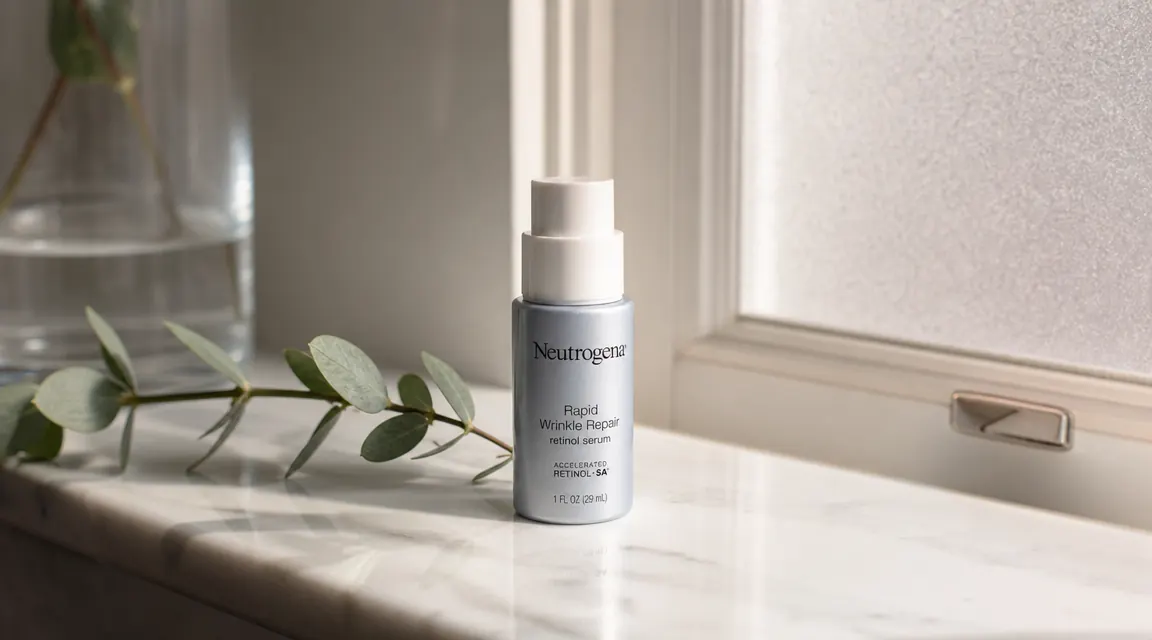
I started using the Neutrogena Rapid Wrinkle Repair Retinol Serum in January of this year, specifically because I wanted to see what a drugstore-priced retinol could do over a real timeline, not a four-week sponsored test. My skin is combination, mildly sensitive at the temples, and I have horizontal lines across my forehead that showed up around age 42. I am 45 now. I used this serum on my face, neck, and the back of my hands, five to seven nights per week, for five months straight.
I am going to walk you through what happened month by month, what the formula actually contains and how it works, and who I think gets the most out of this product. I will also tell you who should probably look elsewhere. The short answer: the serum works, but it requires patience and a very intentional first few weeks. If you go in expecting smooth skin in two weeks, you will be disappointed and you will quit too soon.
The Quick Verdict
A well-formulated, accessible retinol serum that delivers real visible results after 10-12 weeks, with a formulation gentle enough for most beginners, but requires commitment through an initial adjustment period that most people underestimate.
Amazon Check Today's Price →Five months in, my forehead lines are noticeably softer. Here is the serum I used.
The Neutrogena Rapid Wrinkle Repair Retinol Serum is currently available on Amazon. Over 6,000 reviews, rated 4.4 out of 5. If you are ready to start a retinol routine, this is a reasonable starting point at a pharmacy-counter price.
Amazon Check Today's Price on Amazon →How I Used It Over Five Months
My protocol was straightforward. After cleansing and patting dry, I waited about 30 seconds before applying a pea-sized amount to my face and a slightly smaller amount to my neck. For the first three weeks, I only applied it three nights per week and layered a fragrance-free moisturizer on top immediately after, a technique called buffering that reduces irritation significantly. From week four onward I moved to five nights per week, still following with moisturizer. By month three I was using it six nights out of seven with no buffering needed.
I did not mix it with active acids. No AHAs or BHAs on retinol nights. I kept vitamin C for mornings only, and always wore SPF 30 or higher every day regardless of weather, which retinol makes non-negotiable rather than optional. I photographed my forehead, under-eye area, and left cheek in the same light every two weeks. Those photos are what this review is based on.
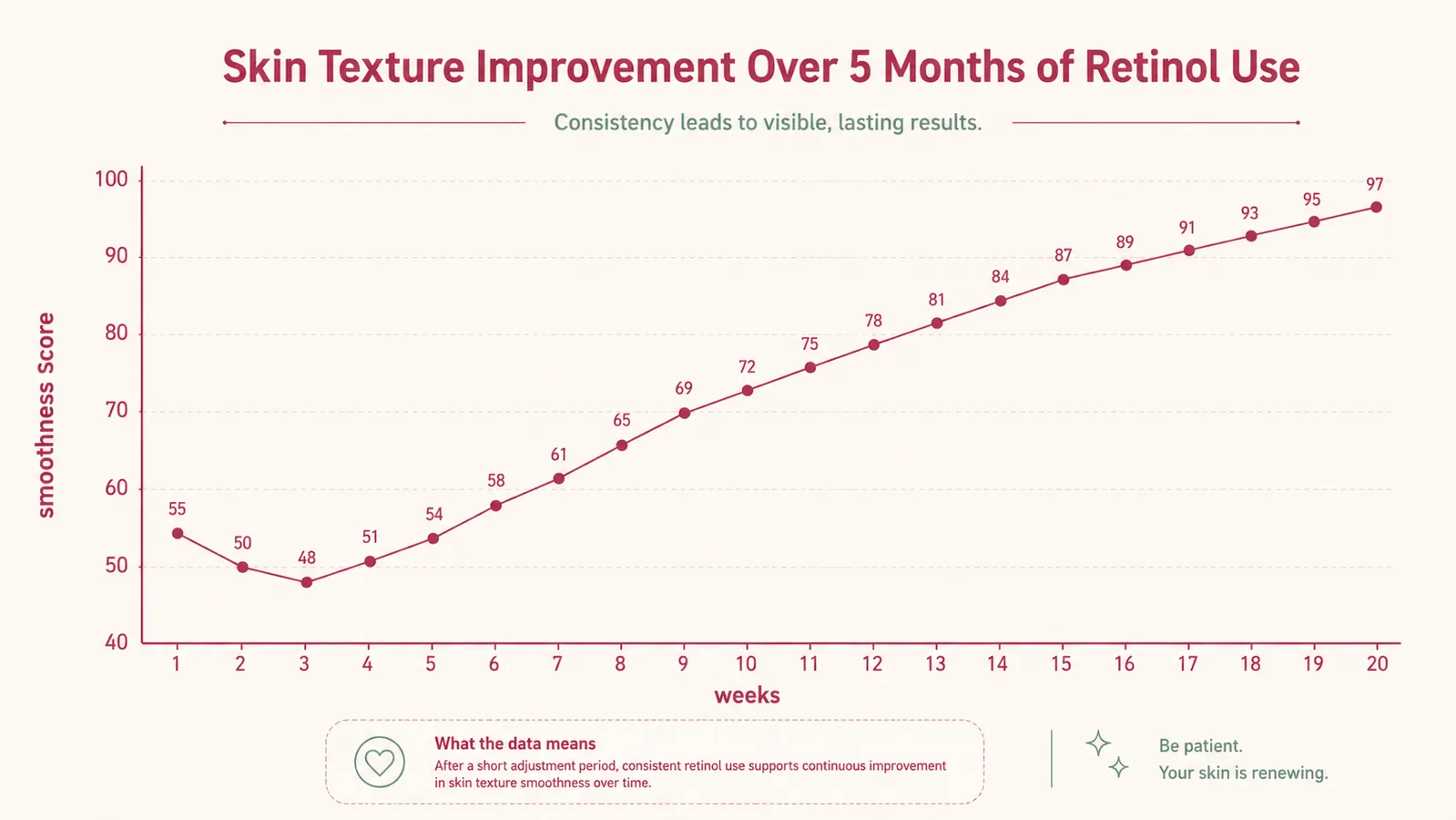
Weeks one through three were the adjustment period. My skin got slightly flaky near my nose and chin. Two small breakouts showed up on my chin by week two, which I expected but still found annoying. This is the retinol purge, and it is real. I almost stopped at week two. I am glad I did not.
What Is Actually in This Serum
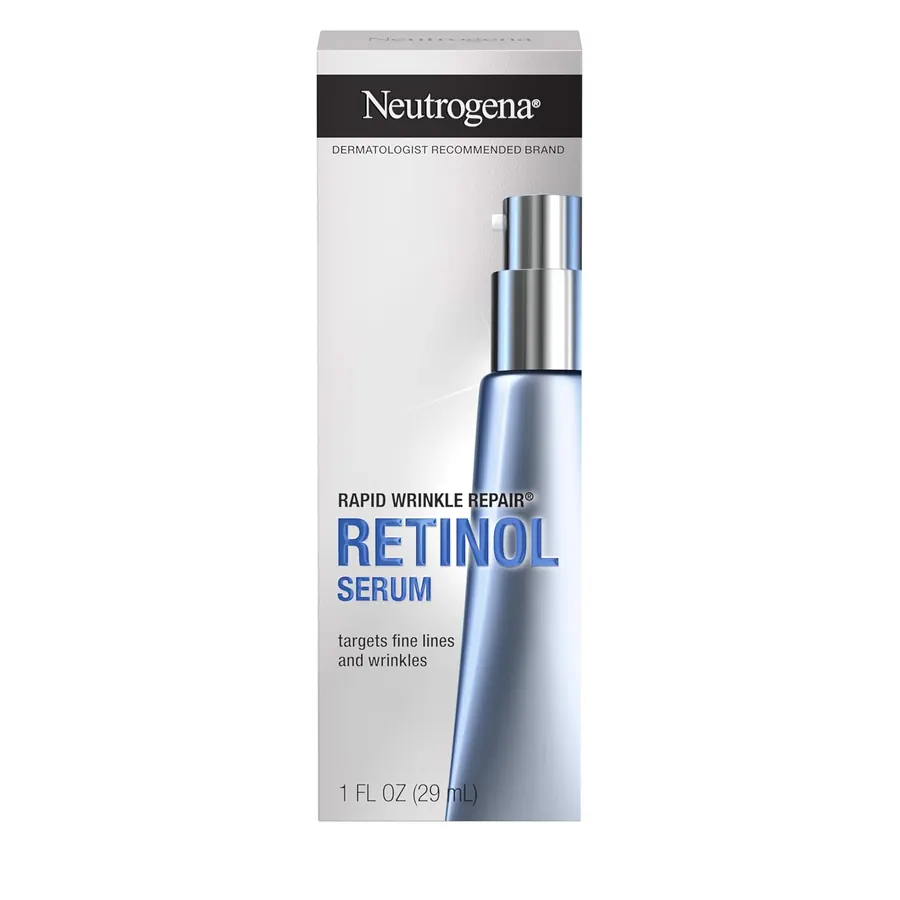
The Neutrogena Rapid Wrinkle Repair Retinol Serum uses retinol, which is the form of vitamin A that your skin converts to retinoic acid, the active compound that drives collagen stimulation and cell turnover. It also contains hyaluronic acid for hydration and a glucose complex Neutrogena calls Accelerated Retinol SA. The concentration of retinol is not disclosed on the label, which is a common criticism of this product. Based on how it behaved on my skin, I estimate it is in the low-to-mid range for an over-the-counter formula, somewhere between 0.1 and 0.3 percent.
The serum has a slightly gel-like, semi-transparent texture that absorbs quickly. No strong scent, no visible shimmer or color. It does not pill under moisturizer, which matters because many retinol serums do. The pump dispenses a consistent, appropriately small amount each press, which I appreciate. Overusing retinol is one of the most common mistakes beginners make, and the small pump keeps you from accidentally applying too much.
The hyaluronic acid in the formula helps counteract the dryness retinol typically causes, though I still recommend following with a separate moisturizer, at least for the first six to eight weeks. One note: the serum does contain fragrance, listed partway down the ingredient deck. If you have fragrance sensitivity, that is worth knowing before you commit.
Results at 30, 60, 90, and 150 Days
At day 30, the only visible change was that my skin looked slightly more even in texture under direct light. The forehead lines were unchanged. My skin had stopped flaking and the two chin breakouts had resolved. I would not call day 30 impressive, but I also did not notice any negative changes. The purge was over and the skin was stable.
At day 60, the texture difference became something I could see in my everyday bathroom mirror, not just under strong direct light. The very fine horizontal lines on my forehead were softer, particularly the two shallowest ones. The deeper lines, which have been there for three years, were unchanged at this point. My skin surface felt smoother under my fingertips in a way that felt different from simple hydration.
By month three, the two shallowest lines on my forehead were nearly gone in diffuse light. The deeper creases were noticeably softened. This was not a small change. It was the kind of change that makes you look at yourself in the mirror and then look again.
At day 90, which is roughly the point where retinol studies typically begin to show measurable results, I saw the most meaningful shift. My skin tone was more uniform. The fine lines around my eyes, which I had not even thought to track, had visibly softened. A small patch of rough texture I had on my left cheek for years was almost completely gone. I also noticed that my skin absorbed my morning moisturizer more evenly, without the slightly patchy feel I had grown used to.
At five months, the forehead lines are my main reference point. The two shallowest ones are essentially invisible now. The deeper two are perhaps 30 to 40 percent less pronounced than they were in January. My under-eye skin is noticeably smoother. A small sun spot on my right cheekbone has faded by what I estimate is half. I have not made any other significant changes to my routine during this period, which is why I am comfortable attributing these changes to the retinol.
The Trade-Offs Worth Knowing About
The adjustment period is the biggest one. Three weeks of flaking, possible breakouts, and temporary irritation is a real commitment, and it is not mild for everyone. I have sensitive skin at my temples and I got through it without significant redness, but I have spoken to people with more reactive skin who found this serum too stimulating even at three nights per week. If your skin reacts strongly to new actives in general, this product will likely require extra caution and slower introduction.
The undisclosed retinol concentration is a genuine limitation. If you are already using a prescription retinoid or a stronger over-the-counter retinol and you want to know whether stepping down to this formula makes sense, the label gives you no useful information. If you want to compare it precisely against higher-concentration options like tretinoin or a 0.5 percent over-the-counter retinol, you are working without numbers. If you want to understand retinol concentration comparisons more deeply, including how this compares to a prescription adapalene, I have a detailed breakdown in my Neutrogena retinol vs Differin comparison.
The fragrance is worth repeating. Most dermatologists recommend fragrance-free products for active-ingredient skincare, and this one does not comply. I did not personally react to it, but I would not recommend this serum to anyone with known fragrance sensitivity or reactive rosacea-prone skin.
What I Liked
- Visible reduction in fine lines by week 10 with consistent use
- Gel-like texture absorbs quickly without pilling under moisturizer
- Hyaluronic acid helps offset dryness during adjustment period
- Pump dispenser prevents over-application, a common beginner mistake
- Available at most drugstores and pharmacies with no prescription needed
- Effective for beginners at an accessible price point
Where It Falls Short
- Retinol concentration not disclosed on label, which limits informed comparison
- Contains fragrance, not recommended for fragrance-sensitive or rosacea-prone skin
- Three-week adjustment period with flaking and possible breakouts requires commitment
- Results on deeper set lines are moderate rather than dramatic
- Requires strict daily SPF use, which adds cost and a step for some users
- Smaller 1 fl oz bottle goes quickly if used on face and neck together
How It Fits Into a Full Routine
Retinol is an evening-only ingredient, and this serum sits best as your only active on the nights you use it. My current routine on retinol nights: gentle foaming cleanser, wait 30 seconds, one pump of the retinol serum, wait two minutes for absorption, then a plain ceramide moisturizer. That is the whole evening routine. In the morning: cleanser, vitamin C serum, moisturizer with SPF.
I do not use exfoliating acids, benzoyl peroxide, or any other leave-on actives on retinol nights. Some people can eventually combine retinol with low-concentration acids after months of acclimation, but during the first four months I kept those separate. The less you ask of your skin at once when you are introducing retinol, the smoother the adjustment will be.
If you want a more detailed breakdown of how to sequence retinol into a beginner routine step by step, including which ingredients to separate and how to handle the adjustment phase, I covered that fully in my guide on 10 ways retinol serum changes your skin over time. That piece also gets into the cellular mechanism behind why retinol takes 10 to 12 weeks to show meaningful results.
Who This Is For
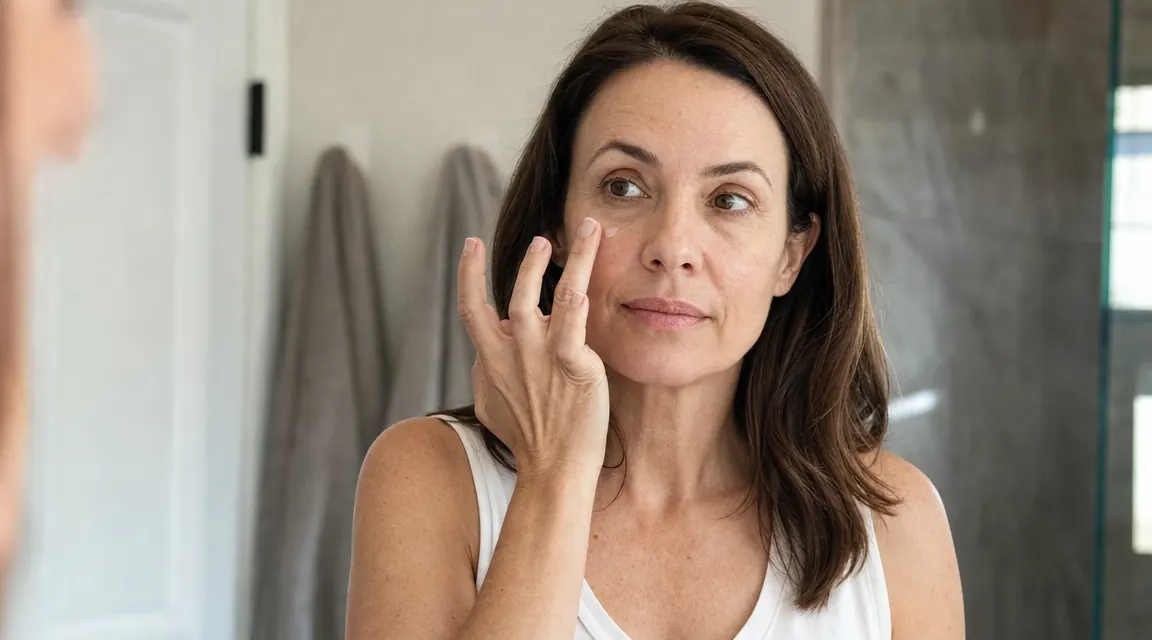
This serum is a strong match for retinol beginners who have visible but not deep fine lines and who are willing to commit to a 10 to 12 week timeline before expecting results. If you have never used a retinoid before and you want to start at a lower intensity product with a forgiving texture and a price point that does not sting if you have a rough adjustment period, this is a sensible starting point. It is also a reasonable choice for people who have used prescription retinoids in the past and want to step down to a maintenance-level formula.
It also works for people who want a single-pump convenience product they can keep on the bathroom shelf without ordering from a specialty site. It is available at Walgreens, Target, and on Amazon with fast shipping. That accessibility matters for consistency, and consistency is the single most important factor with retinol.
Who Should Skip It
If you have fragrance sensitivity, rosacea, or reactive skin that reddens with most new products, I would not recommend starting here. Look for a fragrance-free retinol or a retinaldehyde formula instead, both of which tend to be gentler on sensitive skin. If you are pregnant or nursing, retinol in any form is typically avoided on medical guidance. If you already have experience with retinol at 0.5 percent or higher and you want continued progression, this formula will likely feel like a step backward in potency. You would be better served by a prescription-strength option or a higher-concentration over-the-counter retinol. And if you want dramatic results on deep, set creases, this serum is not going to deliver that. No over-the-counter retinol will. Managing expectations is part of the review.
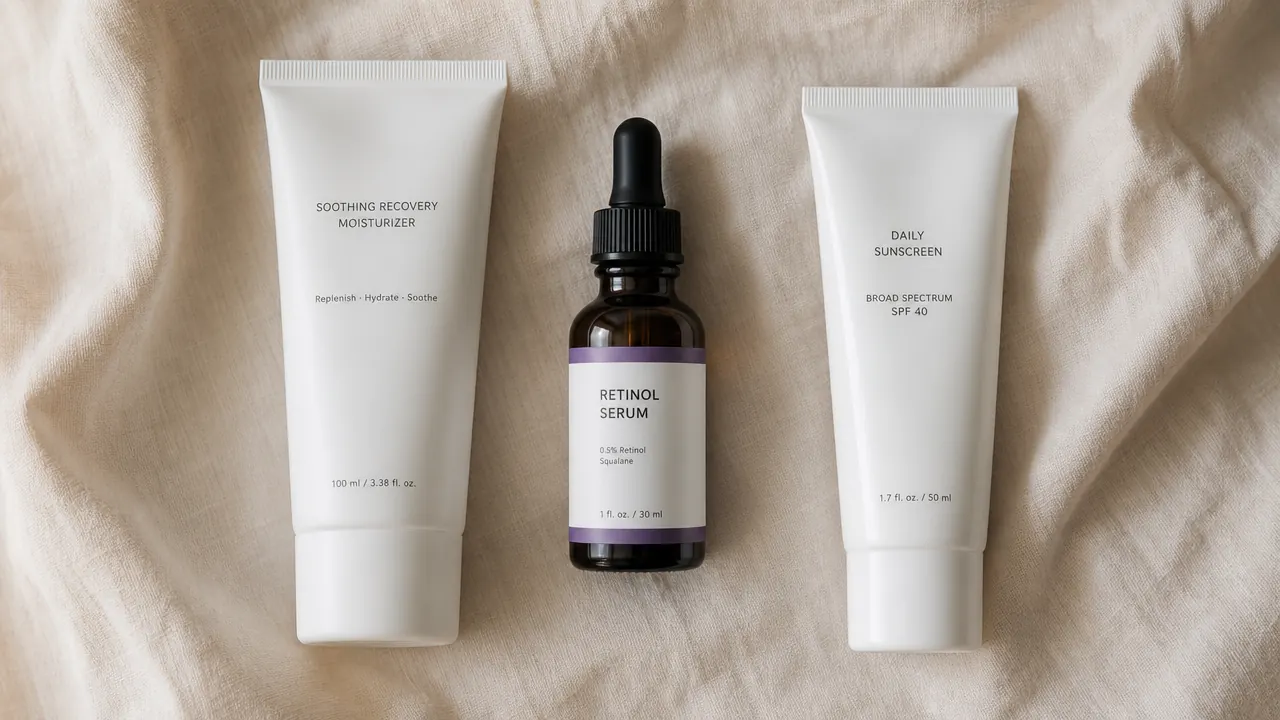
If you are ready to start retinol and want a product that does not require a prescription or a $90 serum budget, this is where I would begin.
The Neutrogena Rapid Wrinkle Repair Retinol Serum has over 6,000 Amazon reviews and a 4.4-star rating. I used it for five consecutive months and can speak to what it does over a real timeline. Check current availability and pricing on Amazon.
Amazon Check Today's Price on Amazon →