

Dark spots are one of the most common complaints I hear from readers, and one of the most frustrating to deal with, because they fade slowly, inconsistently, and only if you're doing the right things in the right order. Post-acne marks, sun spots from years of skipped SPF, and the uneven patches that show up after hormonal changes all fall into the same general category: hyperpigmentation. The skin overproduced melanin in a specific area and left a visible reminder. A vitamin C serum can help, but the results depend almost entirely on how you use it.
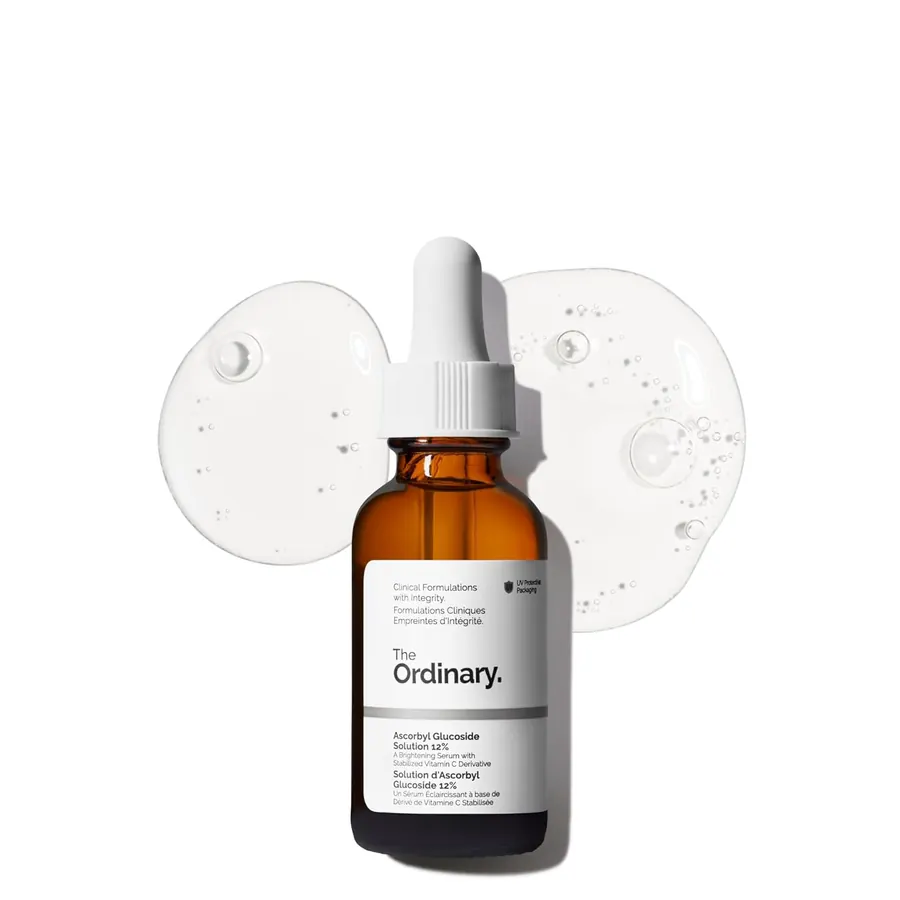
I've spent the last year testing vitamin C serums on my own skin, specifically on a cluster of sun spots on my left cheek that have been bothering me since my early 30s. Some serums made a visible difference within eight weeks. Others did nothing. The product I've come back to most consistently is The Ordinary Ascorbyl Glucoside Solution 12%, a water-based formula that uses a stabilized vitamin C derivative rather than straight L-ascorbic acid. It's milder, more stable, and far easier to work into a daily routine without redness or irritation. If you want more background on what this serum is and whether it's the right starting point, I covered that in my full four-month review. This guide is specifically about the protocol: what to do, when to do it, and what to pair it with to get the best results on dark spots.
If your dark spots have been stuck for months, the routine you're about to read is the one that finally moved the needle for me.
The Ordinary Ascorbyl Glucoside Solution 12% is a gentle, stabilized vitamin C formula rated 4.6 stars across 2,230+ Amazon reviews. It's the recommended starting point for this protocol.
Amazon Check Today's Price on Amazon →Step 1: Cleanse First, Then Wait Two Minutes
Vitamin C serums work best on clean, slightly damp skin. Before you apply anything, wash your face with a gentle, non-stripping cleanser. You're not trying to dry your skin out here. A light foam or gel cleanser that removes overnight residue without leaving your face feeling tight is ideal. The goal is a clean surface free of oils and product buildup that could prevent absorption.
After rinsing, pat your skin mostly dry with a clean towel and wait about two minutes before applying the serum. You don't want your skin actively dripping, but slightly damp skin absorbs water-based actives more readily than fully dry skin. I call this the two-minute rule. It sounds overly precise but it makes a noticeable difference when you're working with thinner, water-based formulas like this one.
One thing to avoid at this stage: toners with alcohol or exfoliating acids like glycolic or lactic acid. These can disrupt the pH of your skin before you've applied the vitamin C, which reduces efficacy and increases the chance of irritation, especially on skin that already has active hyperpigmentation. If you use an acid toner in the morning, save it for nighttime instead.
Step 2: Apply the Vitamin C Serum Correctly (Dosage and Placement)
Dispense three to four drops of The Ordinary Ascorbyl Glucoside Solution 12% into your palm or directly onto fingertips. Warm it slightly by pressing your fingers together before applying. For dark spot treatment, apply the serum evenly across your whole face first, then go back with one additional small drop and press it specifically into the areas where you're seeing hyperpigmentation. The extra concentration helps without crossing into irritation territory.
Press the serum into skin rather than rubbing. Rubbing pulls the serum around before it can penetrate and creates friction on already-sensitized skin. Use a gentle pressing or patting motion from center face outward. Pay particular attention to the areas around your cheekbones and temples where sun damage tends to accumulate, and around the jawline where hormonal pigmentation often shows up. Let the serum sit and absorb for 60 to 90 seconds before moving on.
For skin that is new to vitamin C or that has been reactive to other actives in the past, start with two drops applied to the whole face for the first two weeks. Build up to three or four drops as your skin adjusts. Ascorbyl glucoside is a gentler derivative than L-ascorbic acid, but any active can cause a reaction if you introduce it too aggressively.
Step 3: Layer Moisturizer to Lock Everything In
Once your vitamin C serum has absorbed, apply a lightweight moisturizer while your skin is still slightly tacky from the serum. This layering sequence matters. Applying moisturizer over a still-wet active helps trap the ingredients against the skin surface and reduces transepidermal water loss while the serum continues absorbing. The moisturizer also acts as a buffer that can calm any mild tingling if your skin is sensitive to vitamin C in the initial weeks.
Keep the moisturizer simple at this step. A fragrance-free, non-comedogenic formula with hyaluronic acid or ceramides works well here. You don't want to layer a second active over your vitamin C in the morning. Save retinol, niacinamide, and exfoliating acids for your nighttime routine entirely. The morning routine is about vitamin C, moisture, and SPF. That's it.
Vitamin C does its best work when SPF is doing its job too. Without sunscreen, you're fading spots during the day and re-triggering them every time you step outside. The routine only works if both steps happen.
Step 4: SPF Is Not Optional, It's the Other Half of This Protocol
Sunscreen is not an add-on to a dark spot routine. It is the other half of it. UV exposure is the number one trigger for melanin overproduction, which is exactly the process that creates and darkens hyperpigmentation. If you're applying vitamin C every morning but skipping sunscreen before going outside, you are working against yourself. I cannot overstate this: dark spots will not fade meaningfully without consistent daily SPF use. They may even get darker.
Apply a broad-spectrum SPF 30 or higher as the last step in your morning routine, after moisturizer has absorbed. Mineral formulas with zinc oxide or titanium dioxide sit on top of skin and work immediately. Chemical sunscreens require 20 minutes to absorb before they're fully effective. Either works, but factor the timing into when you apply if you're rushing out the door. Apply a generous amount, which for most adults means roughly a quarter teaspoon for face and neck combined. Most people underapply by about half.
Reapplication during the day is also worth mentioning. If you spend more than two hours in direct sun or sweat heavily, SPF needs to be reapplied. A physical powder SPF works well for midday touch-ups without disturbing makeup. The more consistent your sun protection, the faster your vitamin C serum will visibly reduce those spots.

Step 5: Track Progress Over Eight to Twelve Weeks, Not Eight Days
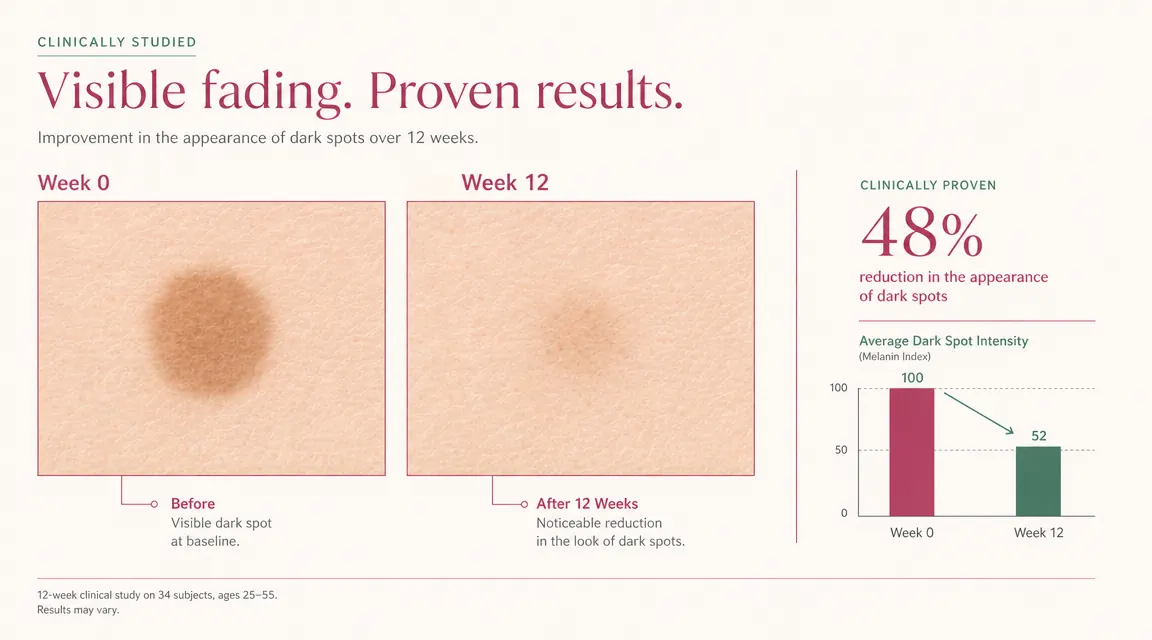
Hyperpigmentation responds slowly. When I started this protocol with The Ordinary Ascorbyl Glucoside Solution 12%, I took a photo under the same bathroom light every two weeks. I did not notice anything the first two weeks. By week four, the dark patches on my left cheek had visibly lightened. By week eight, two of the three spots were almost imperceptible. The third was still there but clearly softer and less defined. By week twelve, I would describe my skin tone as significantly more even than when I started.
The reason for the timeline is that vitamin C works at the cellular level, interfering with the enzyme (tyrosinase) that drives melanin synthesis. Skin cell turnover takes roughly 28 days in younger skin and longer as we age. You are not bleaching surface cells. You are interrupting melanin production lower in the epidermis and waiting for those new cells to surface. This means visible results lag behind the actual biochemical work being done. If you stop after three weeks because you don't see changes, you quit before the change had a chance to reach the surface.
Take photos every two weeks under consistent lighting, not mirror selfies in varying daylight. Even use the same camera angle. Small changes read clearly in photos when they're nearly invisible in the mirror. This simple habit keeps you from abandoning a routine that's actually working.
What Else Helps: Supporting Ingredients That Accelerate Results
Vitamin C is the engine of this routine, but a few supporting ingredients can meaningfully accelerate results. Niacinamide used at night helps regulate melanin transfer within the skin, which complements what vitamin C does during the day. Azelaic acid, available over the counter in the US at 10%, directly inhibits tyrosinase and is well tolerated by sensitive and melanin-rich skin types. Tranexamic acid is another option, used in both serums and spot treatments. None of these replace vitamin C in your morning routine. They layer alongside it in the evening.
Gentle chemical exfoliation once or twice a week at night with a low-strength glycolic or lactic acid product helps clear dead surface cells and lets the skin underneath, which has been seeing the benefit of the vitamin C, come to the surface faster. Don't exfoliate on the same nights you use a retinol or a stronger active. Keep it simple: two to three nights a week for exfoliation, the other nights for nourishing serums and a barrier-supportive moisturizer.
If you want the full breakdown of why vitamin C works at this level, including the research behind antioxidant protection and melanin inhibition, the article on why vitamin C serums actually change skin covers the science in plain language without the jargon.
The one thing to avoid pairing with vitamin C in the morning is benzoyl peroxide, which oxidizes and degrades vitamin C rapidly. Keep benzoyl peroxide strictly in your nighttime routine if you use it at all.
Eight weeks of this routine changed what I saw in the mirror. The Ordinary Ascorbyl Glucoside 12% is where I'd start.
Rated 4.6 stars by 2,230+ verified buyers. A gentle, stabilized vitamin C serum at a price that doesn't require a budget reset.
Amazon Check Today's Price on Amazon →