
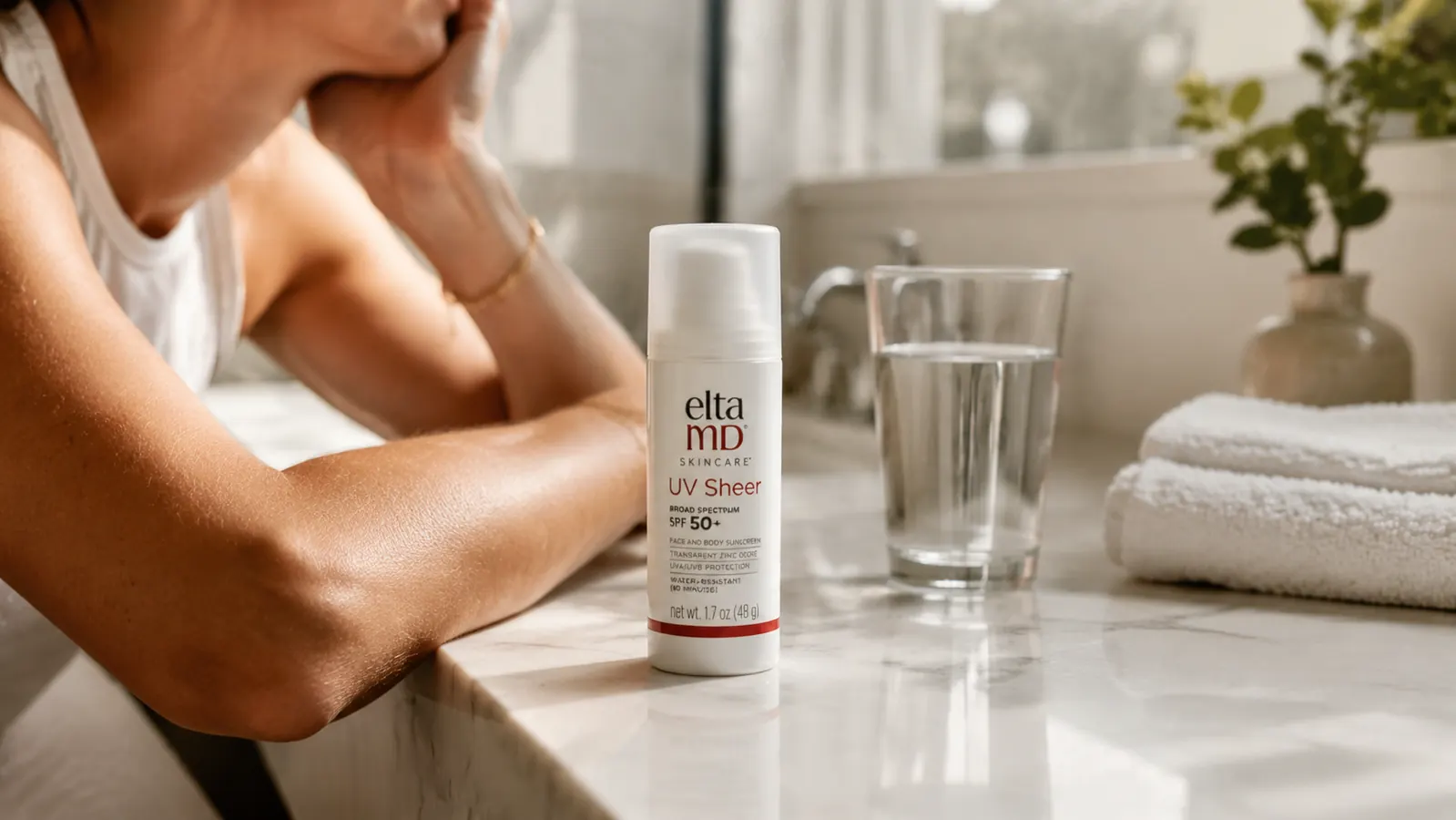
I have combination skin that leans sensitive, and for years I treated SPF as a negotiable step. Sunscreen either left a white cast that settled into every pore on my nose, or it felt so greasy that my foundation slipped off by noon. I cycled through chemical filters, tinted formulas, and mineral sticks. None of them stuck. Then, in January of last year, I opened a tube of EltaMD UV Sheer SPF 50+ because my dermatologist mentioned it offhand during a routine visit, and I have used it every single morning since. Six months of daily wear on the cheeks, nose, forehead, and chin. I want to tell you exactly what I found.
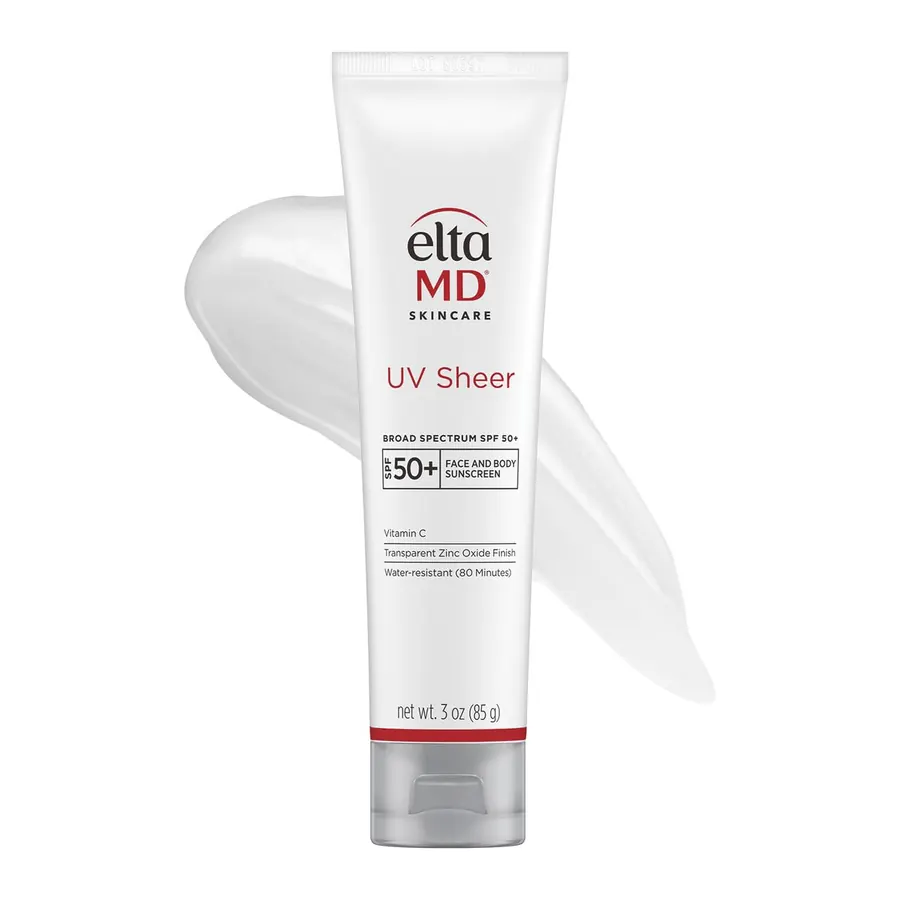
EltaMD UV Sheer SPF 50+ uses transparent zinc oxide as its active ingredient, paired with hyaluronic acid. The formula goes on like a lightweight serum, not like what most people picture when they think of mineral sunscreen. That is the thing dermatologists keep recommending it for, and after six months I understand why.
The Quick Verdict
A mineral SPF 50+ that actually disappears into skin, holds up through an average day, and does not break out sensitive or combination skin. Worth the price if sunscreen compliance has ever been your problem.
Amazon Check Today's Price →If sunscreen has always felt too heavy or too white, this is the one worth trying first.
EltaMD UV Sheer SPF 50+ uses transparent zinc oxide so it protects without a visible cast. It has 3,700+ ratings on Amazon and is frequently recommended by board-certified dermatologists.
Amazon Check Today's Price on Amazon →How I Have Been Using It
My routine is consistent enough that testing sunscreen in it is fairly controlled. Every morning I wash with a gentle low-pH cleanser, follow with a vitamin C serum that takes about four minutes to absorb, and then apply sunscreen as the last step before any makeup. I do not moisturize separately on most mornings because I find the hyaluronic acid in this formula does enough for my combination skin in non-winter months. In December and January I added a thin layer of a ceramide moisturizer underneath.
Application is two full pumps for face and neck, blended in with fingertips using upward strokes. For reapplication, I use one pump pressed lightly over my makeup around the two-hour mark on days I am outside for extended stretches, and I skip reapplication on desk-work days. I tracked my skin condition using a simple 1-to-5 scale for redness, dryness, and breakouts each week for the first three months, then moved to monthly check-ins.
This is not a clinical study. It is one person wearing one sunscreen every day for six months and paying attention. That said, I have done this long enough with enough different products to know what is the formula and what is coincidence.
The Formula: What Is Actually in This Tube
The active ingredient is 9% zinc oxide, which is on the lower end for a mineral-only SPF 50+. The reason it manages SPF 50+ protection at that concentration is the particle size: EltaMD uses micronized zinc oxide, meaning the particles are small enough to sit in a thin, even layer without scattering visible light and turning white. Some people have concerns about micronized minerals, but the current dermatological consensus is that zinc oxide does not penetrate the skin barrier in meaningful amounts regardless of particle size.
The supporting cast matters here too. Hyaluronic acid pulls moisture to the surface, which contributes to why the finish looks dewy rather than flat. The formula is fragrance-free, paraben-free, and oil-free, which is the combination that makes it compatible with sensitive and acne-prone skin. There are no chemical filters like avobenzone, octinoxate, or oxybenzone, which is relevant both for skin reactivity and for people who prefer reef-safe formulas.
Texture out of the pump is thinner than I expected from a mineral sunscreen. It looks almost like a clear serum. It does not feel heavy going on and it does not pill under makeup, which was my biggest frustration with several other mineral SPFs I had tried before.
What Changed Over Six Months
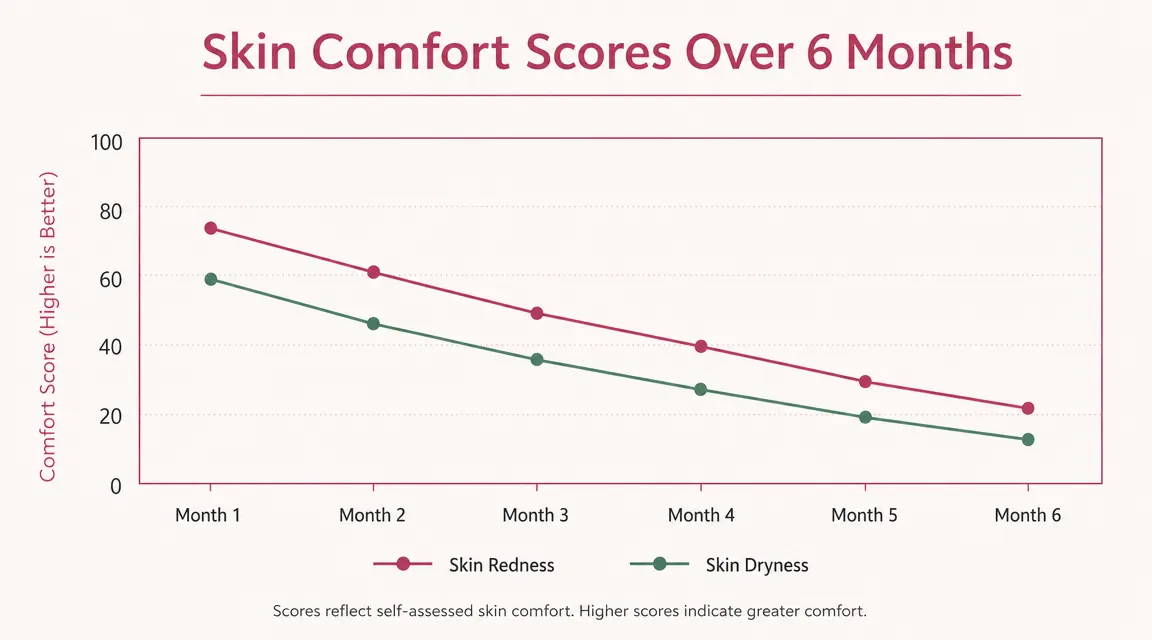
Month one was an adjustment. The dewy finish was something I had to get used to because my previous sunscreen was a matte finish. Around week three, I stopped noticing. By month two, I was applying it without thinking about the finish at all, which is exactly how a daily sunscreen should feel.
The biggest change I tracked was skin redness. I have some persistent mild redness on my nose and cheeks that tends to flare with certain actives and physical irritants. By month three, it had calmed noticeably, and I attribute at least part of that to consistent daily UV protection. Sun exposure is a significant driver of redness and barrier disruption in sensitive skin, and the difference between wearing SPF every day versus most days is more noticeable than I would have expected.
Breakouts were not a concern. I was watching for that carefully because my chin is prone to congestion with richer formulas. In six months, I had zero breakouts I could attribute to this sunscreen. There were a couple of small hormonal spots in month four, but those were not located in areas where I typically experience product congestion, and the timing lined up with stress, not a formula change.
By month two I was applying it without thinking about the finish at all. That is exactly how a daily sunscreen should feel.
Performance in Real Conditions
I live in a region with hot, humid summers, and I spent a significant chunk of June and July outdoors. EltaMD UV Sheer held up well through two to three hours of outdoor activity before I felt like I needed to reapply. It does not claim to be water-resistant, so I treated it like a daily wear formula, not a sport formula. On beach days or days involving prolonged swimming, I reached for a different sunscreen specifically rated for water resistance. That is not a knock against this product; it is using tools correctly.
Under makeup, it performed better than any mineral SPF I have used in this price range. My tinted moisturizer went on smoothly over it, and my powder set without streaking. I did notice that on very humid days, the dewy finish translated to a slightly shinier appearance by midday, particularly on the nose. Blotting paper handled it without disturbing the SPF layer.
Cold weather performance was fine. In December and early January, I added moisturizer underneath and did not experience any additional pilling or balling at the seams of the layers.

The Tradeoffs I Want to Be Clear About
The price is real. At around $45 for a 3.0 oz tube, this is not in the same category as a drugstore SPF. If you are someone who applies sunscreen generously to face, neck, decolletage, and ears every day, a tube lasts roughly five to six weeks at two pumps per application. That works out to around $8 to $9 per week for sun protection, which is a meaningful recurring cost. I think it is worth it, but I want you to go in clear-eyed.
The dewy finish is not for everyone. If you have oily skin and prefer a matte look, this may not be your best option. The formula is oil-free but it is not mattifying, and on oily skin, the hyaluronic acid and lightweight serum texture can contribute to shine rather than minimize it. I have combination skin that leans more dry in cooler months, which is probably why the finish works well for me.
I also want to flag that this is not a tinted formula, so it provides no color correction for redness or uneven tone. Some people compare it to La Roche-Posay Anthelios, which offers tinted options. If coverage over redness is something you need from your SPF, you may want to read the side-by-side comparison of EltaMD UV Sheer and La Roche-Posay Anthelios before deciding.
What I Liked
- No visible white cast on medium skin tones and lighter; blends to a clear, slightly dewy finish
- Fragrance-free, oil-free, and paraben-free, which makes it suitable for reactive and acne-prone skin
- Hyaluronic acid in the formula means you can often skip a separate moisturizer in warmer months
- Does not pill under makeup or sit on top of the skin like a traditional zinc oxide formula
- Consistent dermatologist recommendation and 4.6-star average across 3,700+ reviews
Where It Falls Short
- Around $45 per tube, significantly more expensive than drugstore mineral SPF options
- Dewy finish is not suitable for oily skin types or people who prefer a matte appearance
- Not water-resistant, so it is not a suitable substitute for a sport sunscreen
- No tint or color-correcting pigment for people who want SPF and coverage in one step
- Tube opening is small, which makes it difficult to use the last 10-15% of product
Alternatives I Considered
Before settling on EltaMD UV Sheer, I spent time with three other mineral SPFs. Two were in the $15 to $20 range and both left a noticeable white cast on my skin, which became gray-toned under fluorescent office lighting. The third was a comparable price point but included a light fragrance that I noticed around my eyes, which is a dealbreaker for me personally.
La Roche-Posay Anthelios is the most frequent comparison I see, and it is a strong product. The tinted version of Anthelios is better than EltaMD UV Sheer for someone who wants color correction built in. For people with darker skin tones, the tinted mineral options generally perform better than untinted because the iron oxides in the tint help with visible light protection as well as UV. If that describes you, read the full comparison before choosing.
For people new to mineral sunscreen who want to understand why SPF 50 specifically matters before committing to the price, this overview of 10 reasons mineral SPF 50 protects skin better than lower SPF formulas covers the science clearly.
Who This Is For
EltaMD UV Sheer is a strong fit for people with sensitive, combination, or normal-to-dry skin who have struggled to find a mineral sunscreen that does not disrupt their skin or their makeup routine. It is also well suited for people using active ingredients like retinol, vitamin C serums, or prescription tretinoin, where consistent SPF protection matters and formula compatibility with other actives is a concern. If you have been skipping sunscreen because every formula you have tried feels wrong, this is the one that removed that friction for me.
Who Should Skip It
If you have oily skin and need a matte finish, there are better options. If you need water resistance for swimming or heavy outdoor exercise, this is not the formula. If price is a primary concern and you can tolerate a slight white cast, there are solid mineral options in the $15 to $20 range that provide comparable UV protection. And if you want tint built into your SPF, you will be better served by one of the tinted mineral formulas from La Roche-Posay or ISDIN.
Six months in, this is still the sunscreen I reach for every morning. It solved a problem I had been working around for years.
EltaMD UV Sheer SPF 50+ is available on Amazon with free shipping for Prime members. Check the current price and read other verified buyer reviews below.
Amazon Check Today's Price on Amazon →